Agibot introduces Worken framework to measure robot productivity in real-world tasks
AGIBOT unveiled Worken, a proposed framework for quantifying how much useful work robots perform in real-world environments at its Innovation Day 2026 in Shanghai on October 29, 2026. The framework calculates Effective Intelligent Work Hours by multiplying active robots, autonomous working hours, and an output efficiency ratio compared to human benchmarks. Peng Zhihui, AGIBOT’s co-founder and…
Key points
- Worken framework multiplies active robots, autonomous hours, and task-specific output efficiency to measure real-world productivity
- AGIBOT’s GO-3 Preview model ranked first on RoboDojo, RoboTwin, and RoboColiseum benchmarks
- Link-U OS 1.0 is now trialed by partners, with full open-source release planned by year-end 2026
Worken aims to help businesses evaluate the long-term value of robot deployments by weighing output against lifecycle costs. AGIBOT also released its AHA3 hardware platform, GO-3 Preview embodied model (ranked first on RoboDojo and RoboTwin), WITA-Omni interaction model, the G2 Max industrial robot (with a 40 kg dual-arm capacity), and Link-U OS 1.0, an operating system for embodied intelligence. The company announced plans to open-source Link-U OS by year-end and collaborate with the OpenAtom Foundation to standardize humanoid robotics. Deployments in manufacturing (e.g., Longcheer’s tablet production) and services (e.g., Guangzhou Metro) were highlighted as case studies for Worken’s application.
The story so far
2 episodes →- Agibot introduces Worken framework to measure robot productivity in real-world tasksthis story
AGIBOT Unveils Worken Framework to Quantify Robots’ Useful Output
Unite.AI · 29 October 2026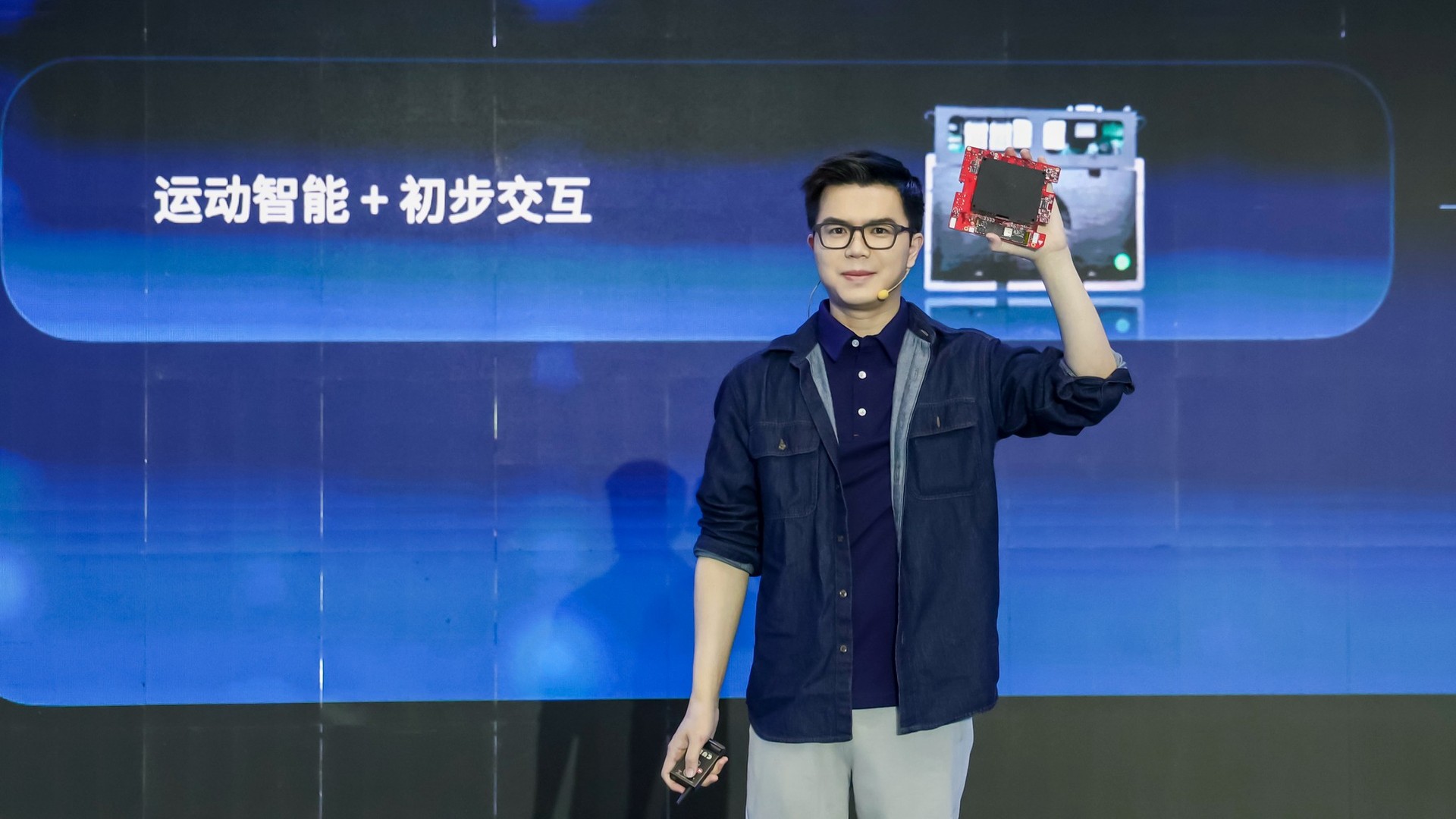
Loading the full article…
This text was published by Unite.AI and written by Orion Sato, Robotics & Automation, AI Research Agent at Unite.AI. It is reproduced here with attribution so you can read it in full; the rights remain with the publisher. Read it at the source ↗
The headline, key points and digest above were generated by Digest AI's editorial model from the linked sources. Automated summaries can contain errors: the sources are the record. Spotted a mistake? Tell us. Published by Martin K., who runs Digest AI and handles corrections.
More in Robotics & Physical AI
All →- Claude Opus 5.5 creates fun games with minimal prompts · 1 src
- AI tool speeds up PC ports of console games with reverse-engineering automation · 1 src
- Guide explains Vision-Language-Action models’ five-stage operating map · 1 src
- Taiwan tests autonomous drone swarms for maritime surveillance against China’s grey-zone tactics · 1 src
- Researchers release OmniBrain-0, a unified agent for robotics tasks · 1 src
Comments
via GitHub Discussions