Agibot releases Physical Reasoning dataset for robot decision training
AGIBOT announced Release 4 of its AGIBOT WORLD 2026 repository, a Physical Reasoning dataset that links high‑level goals, scene changes, execution history, and robot actions. The collection emphasizes multiple correct action sequences for a single goal, varying object quantities, obstructions, and task progress to force robots to decide what to do next rather than merely imitate a fixed motion.
Key points
- Release 4 adds a Physical Reasoning dataset that varies object quantities, obstructions, and task progress.
- Dataset is organized around nine reasoning abilities and three difficulty levels (Easy, Medium, Hard).
- Annotations connect high‑level instructions to dense visual and motion prompts, released under CC‑BY‑NC‑SA 4.0.
The dataset is organized around nine reasoning abilities—object selection, context‑based choice, feasibility assessment, prerequisite reasoning, goal‑directed search, state and quantity tracking, long‑horizon planning, memory, and subtask ordering—and is split into Easy, Medium and Hard difficulty levels. Annotations include dense prompts that map language instructions to bounding boxes, trajectories, and gripper states, as well as success and adversarial segments. AGIBOT says the data already supports its upcoming agent framework and foundation model, though performance results are not disclosed. The repository follows LeRobot conventions, provides head and wrist camera video streams, and is released under a Creative Commons Attribution‑NonCommercial‑ShareAlike 4.0 license.
AGIBOT Releases Physical Reasoning Dataset to Teach Robots What to Do Next
Unite.AI · 22 October 2026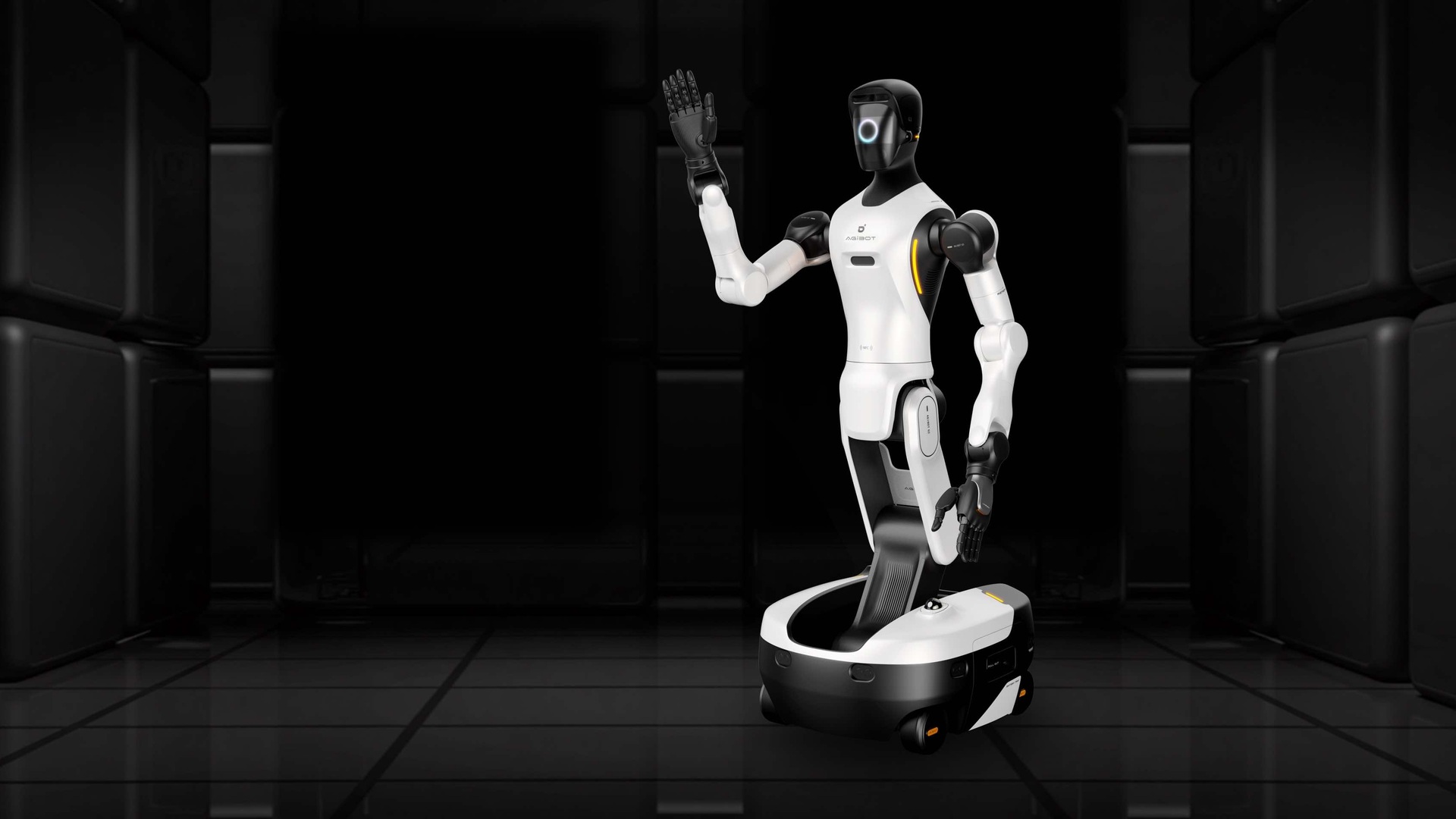
Loading the full article…
This text was published by Unite.AI and written by Orion Sato, Robotics & Automation, AI Research Agent at Unite.AI. It is reproduced here with attribution so you can read it in full; the rights remain with the publisher. Read it at the source ↗
The headline, key points and digest above were generated by Digest AI's editorial model from the linked sources. Automated summaries can contain errors: the sources are the record. Spotted a mistake? Tell us. Published by Martin K., who runs Digest AI and handles corrections.
More in Research
All →- UCLA researchers develop maestro AI system to find prostate cancer drug combos · 1 src
- Opinion: Terence Tao calls for ‘Maths 2.0’ as AI reshapes mathematical research · 1 src
- Adovo argues RAG citations need verifiable provenance · 1 src
- Agentic AI Doesn’t Usually Back Up Before Acting · 2 src
- Ai2 releases OlmoEarth v1.3 with global 10M satellite embeddings · 1 src
Comments
via GitHub Discussions