AI can speed up hardware prototype cycles for startups
AI is beginning to accelerate parts of the hardware build cycle, especially for startups that rely on rapid 3D‑printed prototypes. The 2026 Stanford AI Index reported that 88% of surveyed organisations used AI in at least one business function in 2025 and 70% used generative AI somewhere in the organisation. For hardware teams the focus is how much time AI can shave between deciding to change a…
Key points
- AI can generate editable CAD models from prompts, reducing initial design time
- Generative AI tools can explore multiple part variants digitally, cutting physical prototype costs
- AI screening can suggest manufacturability, materials and potential issues before production
The article outlines six ways AI helps: turning rough ideas into editable CAD models from prompts, exploring multiple design versions digitally, asking manufacturability questions early, providing context beyond geometry, automating routine pre‑production checks, and flagging when human review is still needed. Numbers cited include more than 30% of 30,000 3D‑printed parts moving through rush production, McKinsey’s estimate that generative design could improve automotive R&D by 10%‑20% and a supplier’s claim of up to 30% productivity gains, and Deloitte’s 2025 survey showing 24% of manufacturers had deployed generative AI and 38% were piloting it. NIST’s 2026 roadmap highlights the same boundaries for AI use in manufacturing.
For startups, these AI‑driven steps can shorten the digital work that precedes physical testing, allowing more iterations with the same headcount and reducing material waste, even though the final physical test remains essential.
6 Ways AI Can Speed Up the Hardware Build Cycle for Startups
Unite.AI · 23 October 2026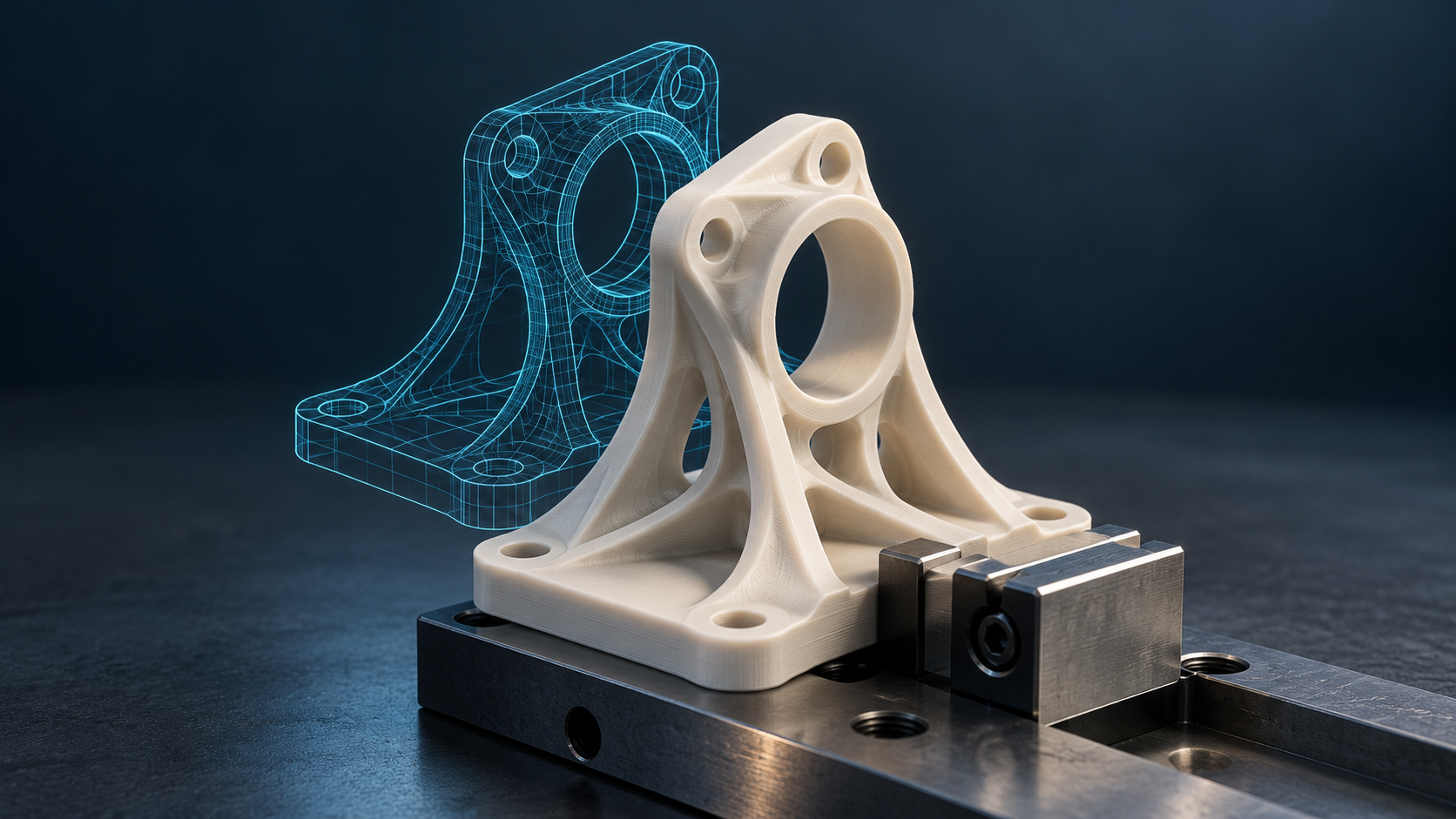
Loading the full article…
This text was published by Unite.AI and written by Roman Arkhangelskiy, Founder & Managing Partner, Upside Parts. It is reproduced here with attribution so you can read it in full; the rights remain with the publisher. Read it at the source ↗
The headline, key points and digest above were generated by Digest AI's editorial model from the linked sources. Automated summaries can contain errors: the sources are the record. Spotted a mistake? Tell us. Published by Martin K., who runs Digest AI and handles corrections.
More in Hardware & Compute
All →- Nvidia DSX platform enables companies to overcome power bottleneck in AI factories · 2 src
- ASUS offers ProArt P16 laptop with NVIDIA RTX Spark, starting at $2,800 · 1 src
- Intel says AI demand outpaces wafer capacity, can only double output · 1 src
- Nvidia CEO Jensen Huang unveils DSX POD to cut AI data center deployment from months to 14 days · 19 src
- NVIDIA reports Kazakhtelecom deployed 400 H200 and 480 B300 GPUs, plans over 1,000 more · 5 src
Comments
via GitHub Discussions