AI power bottleneck in cities
The AI infrastructure market has invested close to $7 trillion by 2030 (McKinsey's estimate) to build data centers, with access to sufficient power being crucial. However, as AI usage extends beyond chat interfaces and into machines, voice systems, video, and applications interacting with the physical world, computing power needs to be closer to urban centers to maintain low latency. This is…
Key points
- AI infrastructure investment reaches $7 trillion by 2030 (McKinsey's estimate)
- Cities account for a significant portion of AI-driven electricity consumption
- Metropolitan areas could support 6-13 MW of latency-sensitive AI load by 2030
The Next AI Power Bottleneck Will Be Inside Cities
Unite.AI · 2 October 2026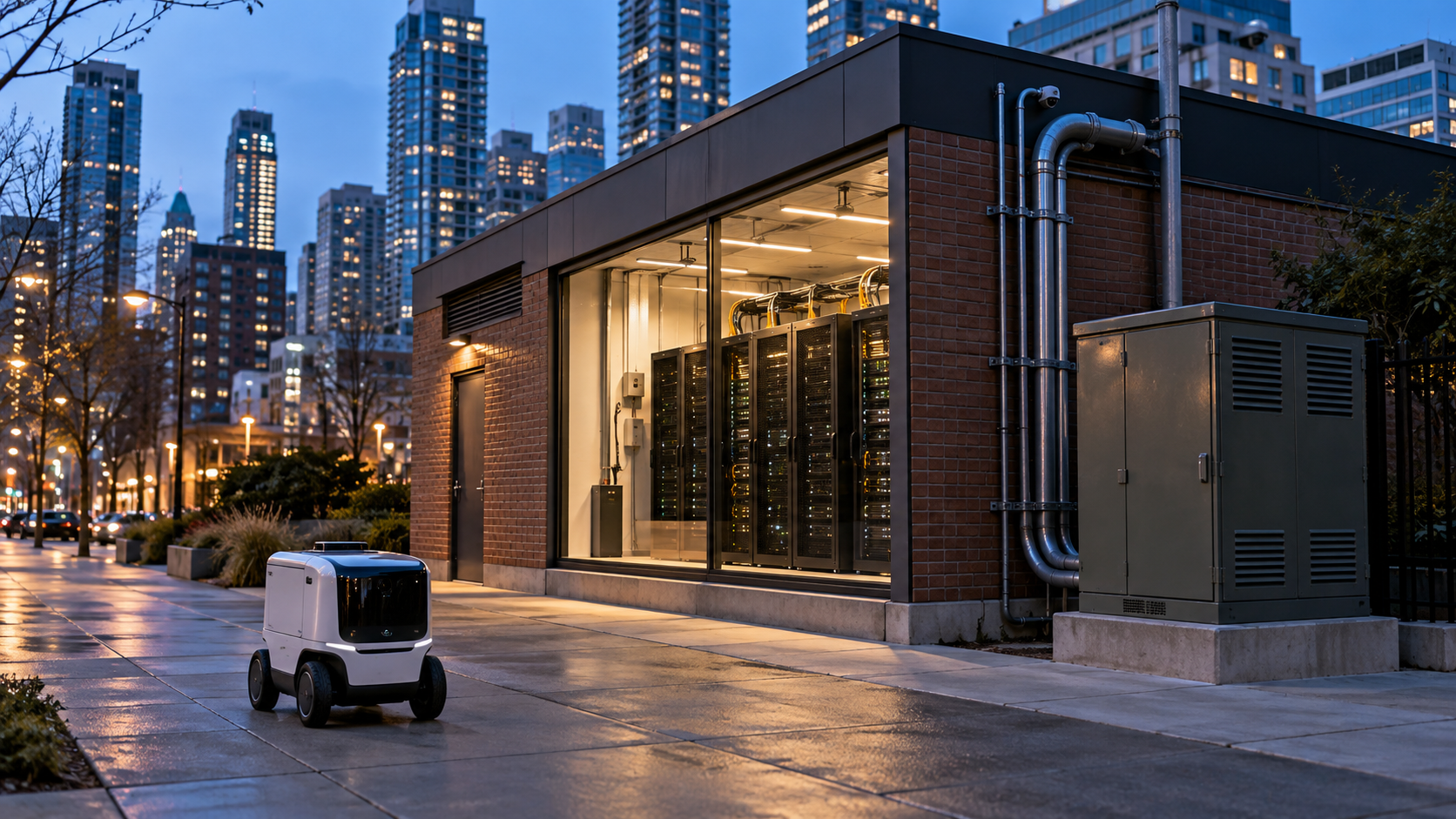
Loading the full article…
This text was published by Unite.AI and written by Denis Alkhazov, Founder & Managing Partner, Teravolt. It is reproduced here with attribution so you can read it in full; the rights remain with the publisher. Read it at the source ↗
The headline, key points and digest above were generated by Digest AI's editorial model from the linked sources. Automated summaries can contain errors: the sources are the record. Spotted a mistake? Tell us. Published by Martin K., who runs Digest AI and handles corrections.
More in Enterprise & Industry
All →- Hestus raises $7.4M seed to build AI for mechanical engineering · 1 src
- MIT study finds 95% of AI pilots fail to boost profits · 2 src
- Accenture and AWS launch Accenture Edge for mid-market AI adoption · 1 src
- Amazon adds Web Search to Claude Desktop via AgentCore · 1 src
- Microsoft launches Agent 365 GCC for government with built-in FedRAMP compliance · 1 src
Comments
via GitHub Discussions