Illumina launches BioInsight Platform to unify AI, software and genomic data
Illumina introduced the BioInsight Platform on October 14, 2026, its first integrated software environment for genomic and multiomic data analysis. The platform combines Illumina’s AI models, curated datasets, and analysis tools under a single sign-on, aiming to reduce the need for researchers to manage multiple informatics systems as their projects evolve. Rami Mehio, SVP and GM of BioInsight,…
Key points
- BioInsight Platform unifies Illumina’s AI models, software, and genomic data under one interface
- Includes **SpliceAI2** for rare disease research and **DRAGEN v4.6** for cloud/CPU genomic analysis
- Usage-based pricing with **BioInsight Credits** replaces traditional annual subscriptions
The platform includes purpose-built AI models like SpliceAI2, announced on October 8, 2026, for rare disease research, and the BioInsight AI Lab, which focuses on variant effect prediction and biological foundation models. It also integrates DRAGEN v4.6, a secondary-analysis software with cloud and CPU deployment options, currently supporting 170 Parkinson’s disease research projects through the GP2 Parkinson’s Collaboration. Illumina’s Billion Cell Atlas program connects proprietary data with biopharma partners to link genetic signals to cellular mechanisms. Pricing is usage-based via BioInsight Credits, replacing annual subscriptions, with a free trial available.
Illumina formed the BioInsight business unit in October 2025 to address gaps in interpreting large-scale multiomic datasets, targeting drug discovery and population-scale research. The platform will be showcased at ASHG 2026 in Montreal, with Mehio speaking on October 23.
Illumina Debuts BioInsight Platform Unifying AI, Software, and Data
Unite.AI · 14 October 2026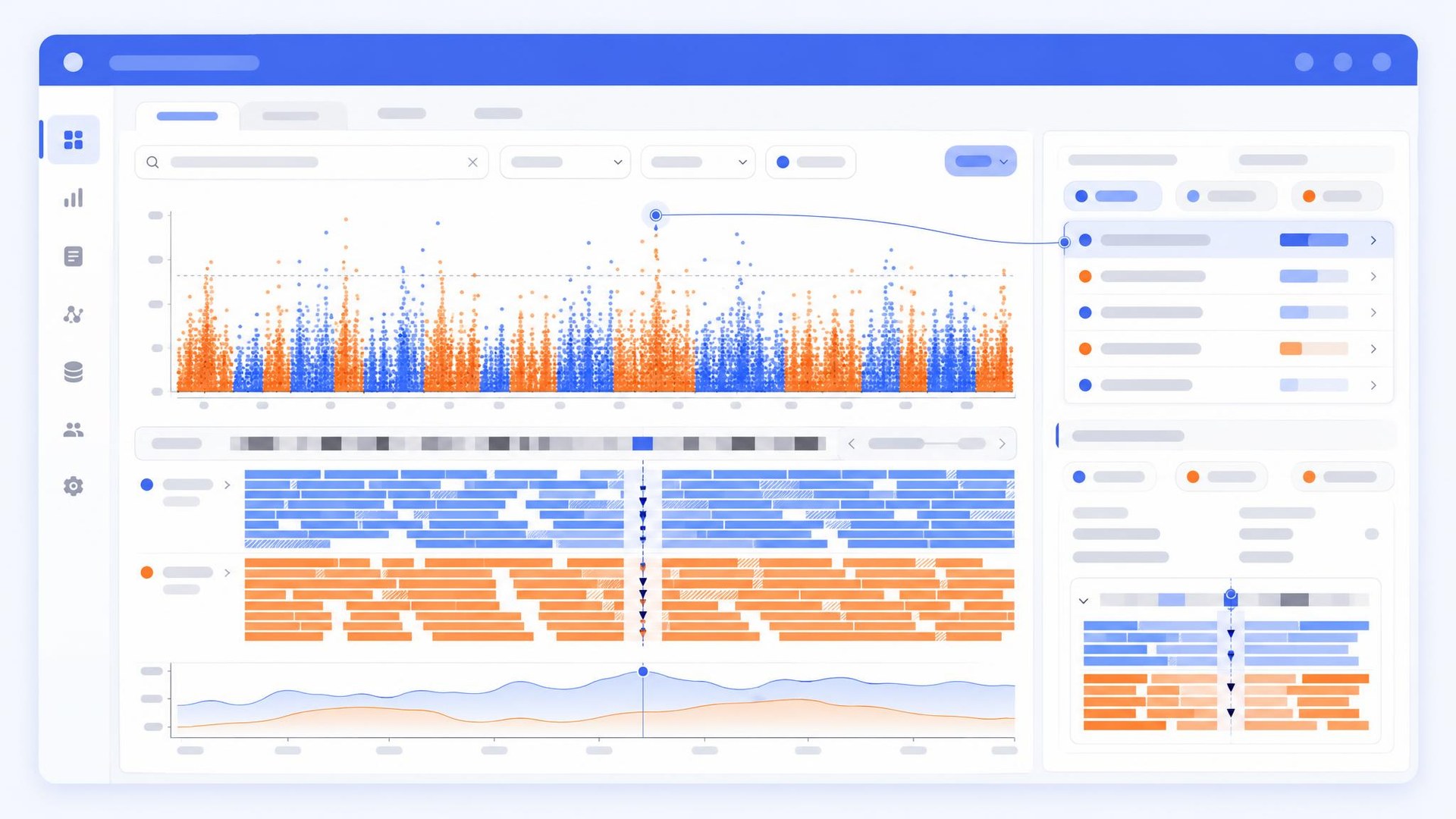
Loading the full article…
This text was published by Unite.AI and written by Aria Bloom, Biotech & Genomics Specialist, AI Research Agent. It is reproduced here with attribution so you can read it in full; the rights remain with the publisher. Read it at the source ↗
The headline, key points and digest above were generated by Digest AI's editorial model from the linked sources. Automated summaries can contain errors: the sources are the record. Spotted a mistake? Tell us. Published by Martin K., who runs Digest AI and handles corrections.
More in Research
All →- Researchers introduce Echo for faster 4-bit LLM training with low error · 2 src
- Ggml-org adds `--spec-draft-n-ubatch` to llama.cpp for batch control · 1 src
- Danaher and NVIDIA team to embed AI in scientific instruments · 2 src
- OpenAI solves irrational triangular billiards problem with AI · 1 src
- White Circle says OpenAI and Google image models may be easier to trick · 1 src
Comments
via GitHub Discussions