Mit researchers unveil worldparticle, a unified AI simulator
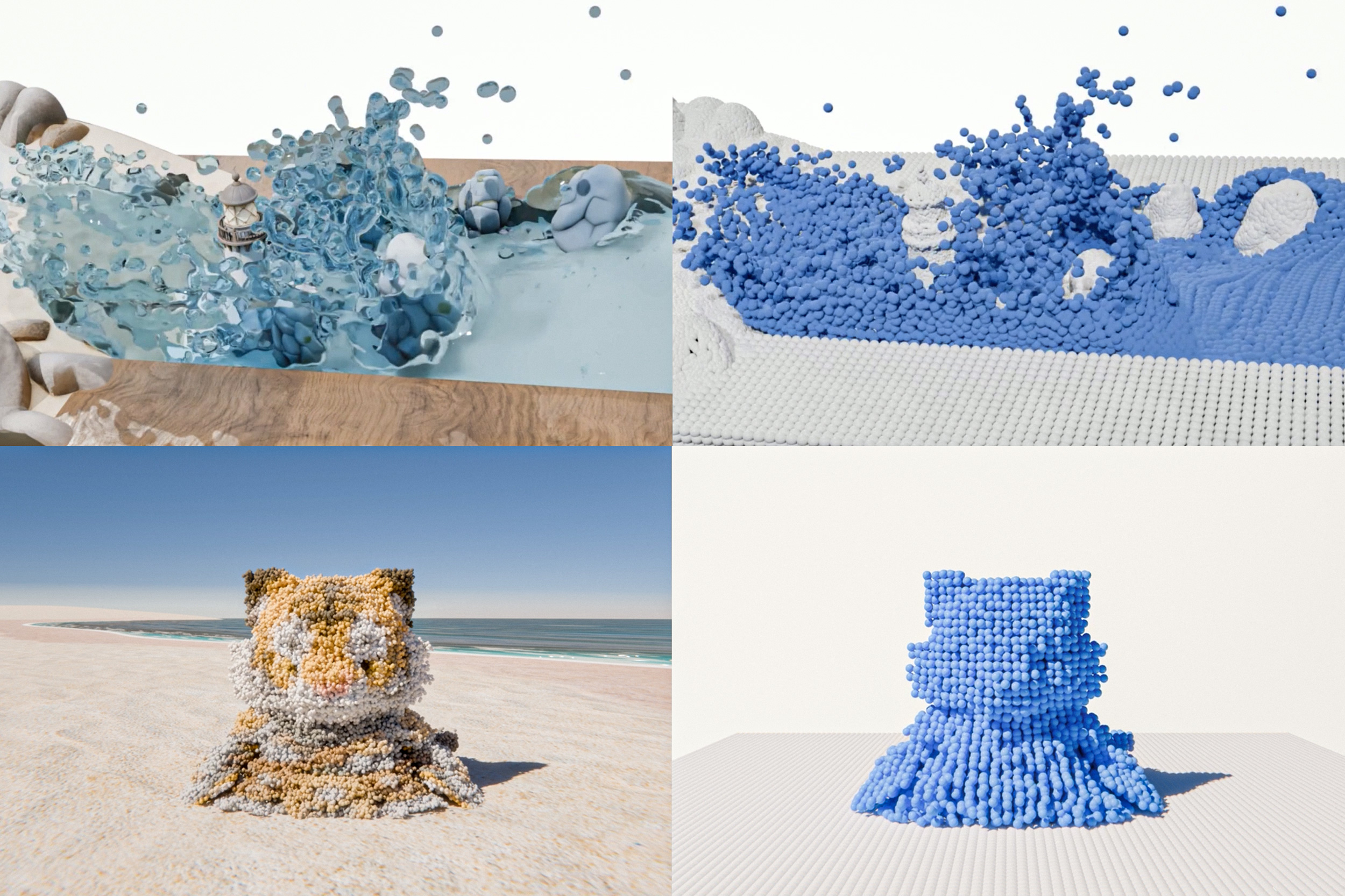
Researchers at MIT, UBC, and other institutions have created WorldParticle, a deep‑learning system that can simulate a wide range of physical phenomena—such as sliding sand, fluid sloshing, and protein folding—using a single neural network.
Key points
- worldparticle is a unified ai model that simulates multiple physical phenomena
- the system represents materials as particles and predicts motion one step at a time
- it achieved higher accuracy than numerical simulators and 100× faster protein folding
The model represents materials as thousands or millions of tiny particles and predicts their motion step by step, learning the underlying dynamics instead of relying on hand‑coded equations.
WorldParticle was demonstrated on six different physical scenarios, achieving higher accuracy than traditional numerical simulators and speeding protein structure changes about 100 times. The team used a merging technique to compress particles and keep the computation tractable. They plan to extend the framework to soft‑robot manipulation, RNA evolution, and astrophysical events like galaxy mergers.
The work will be presented at the ACM SIGGRAPH Conference and Exhibition on Computer Graphics and Interactive Techniques in Asia, and the authors hope the model will enable scientists to discover new materials and study processes that current simulation methods cannot handle.
The headline, key points and digest above were generated by Digest AI's editorial model from the linked sources. Automated summaries can contain errors: the sources are the record. Spotted a mistake? Tell us. Published by Martin K., who runs Digest AI and handles corrections.
More in Generative AI & Models
All →- Hill-climbing Inkling 2 Mini inference · 2 src
- Google showcases six Gemini 4 Hydrogen demos, including a reactive moth · 5 src
- OpenAI rolls out GPT-6.2 Sol for ChatGPT Plus, Pro, and Enterprise users · 8 src
- Perplexity users shift from Opus 5.5 and Sol 6.2 to Gemini 4 Neon at 15% daily growth · 2 src
- Google DeepMind releases 544-prompt HFE test to measure LLM consistency · 1 src
Comments
via GitHub Discussions