MIT researchers win 2026 Pritzker Prize for AI antibiotic work
Regina Barzilay and James Collins, both professors at MIT, have been awarded the 2026 Pritzker Prize for AI in Science Research Excellence. The University of Chicago and Caltech established the award in 2024 to honor contributions that advance both artificial intelligence and natural sciences. The committee recognized the pair for their pioneering work in using AI to discover new antibiotics…
Key points
- Barzilay and Collins won the 2026 Pritzker Prize for AI-enabled antibiotic discovery.
- Their 2020 work identified halicin, the first AI-discovered antibiotic, in weeks.
- They later identified abaucin in 2023, effective against Acinetobacter baumannii.
The researchers’ first major breakthrough came in 2020 with the identification of halicin, the first antibiotic discovered by an AI system. A deep learning model trained on 2,500 molecules identified halicin, which was originally studied as a diabetes drug. Testing showed it could kill resistant bacteria such as Clostridium difficile and Mycobacterium tuberculosis. This process, which typically takes years, was completed in just a few weeks.
In 2023, the team identified abaucin, a narrow-spectrum antibiotic effective against Acinetobacter baumannii. Collins noted that this shift from using AI as a discovery tool to a design tool opens new frontiers for drug development. Barzilay emphasized that while AI can automate parts of the pipeline, building realistic models of human biology remains a significant challenge.
Regina Barzilay and Jim Collins win Pritzker Prize for AI and Science Research Excellence for work in AI-enabled antibiotic discovery
MIT News on AI · 2 November 2026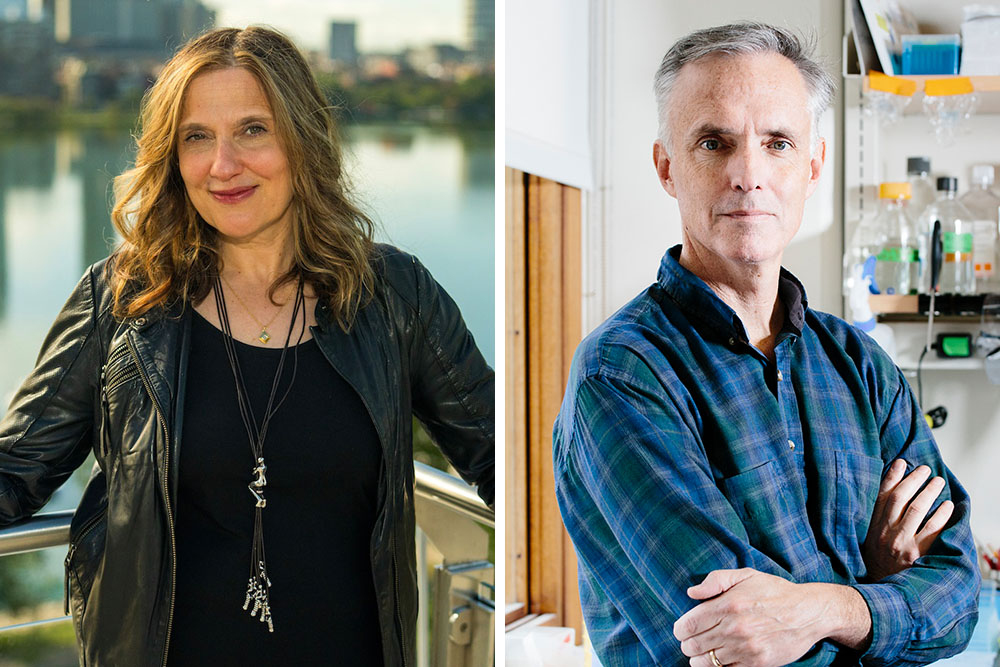
Loading the full article…
This text was published by MIT News on AI and written by Alex Ouyang | Abdul Latif Jameel Clinic for Machine Learning in Health. It is reproduced here with attribution so you can read it in full; the rights remain with the publisher. Read it at the source ↗
The headline, key points and digest above were generated by Digest AI's editorial model from the linked sources. Automated summaries can contain errors: the sources are the record. Spotted a mistake? Tell us. Published by Martin K., who runs Digest AI and handles corrections.
More in Research
All →- Researchers introduce PathLUPI to improve molecular prediction from histology images · 1 src
- GPT-Rosalind-6 offered as research model for biology · 1 src
- Y Combinator Labs and Olam Labs test AI agents in Minecraft, Mindustry for emergent behaviors · 2 src
- Empero Research releases PiVo-1.4M, a 1.4M-parameter text-to-speech model for local use · 1 src
- Unite.AI explains AI latency and throughput metrics for engineers · 1 src
Comments
via GitHub Discussions