MIT team uses LLMs to audit code sharing in 4,000 medical studies
Researchers from MIT and Dana-Farber Cancer Institute used large language models to analyze code-sharing practices in nearly 4,000 clinical prediction studies. The study, published in Nature Medicine, found that only about one in eight studies reported sharing code. Even when code was available, repositories often lacked the documentation and structure needed for other researchers to reproduce…
Key points
- LLMs analyzed nearly 4,000 papers to assess code sharing in clinical prediction studies.
- Only about 1 in 8 studies reported sharing code, with documentation quality varying widely.
- Findings inform TRIPOD-Code, a new guideline for standardizing code sharing in medical research.
The team used LLMs to screen papers for code availability statements and extract links to repositories. They then assessed these repositories for completeness, documentation, and reuse terms. Human reviewers independently checked 500 papers and a sample of repositories to validate the automated findings. The review revealed significant inconsistencies, with code-sharing rates ranging from zero to over 70 percent across different journals.
These findings are informing TRIPOD-Code, a new reporting guideline designed to clarify what researchers should share. The goal is to establish consensus on essential elements for shared analytical code, helping to bridge the gap between medical, statistical, and computer science expectations. The authors emphasize that while policies exist, they may not be sufficient to motivate consistent code sharing without clearer practical guidance.
AI helps researchers investigate how thousands of medical studies share code
MIT News on AI · 19 November 2026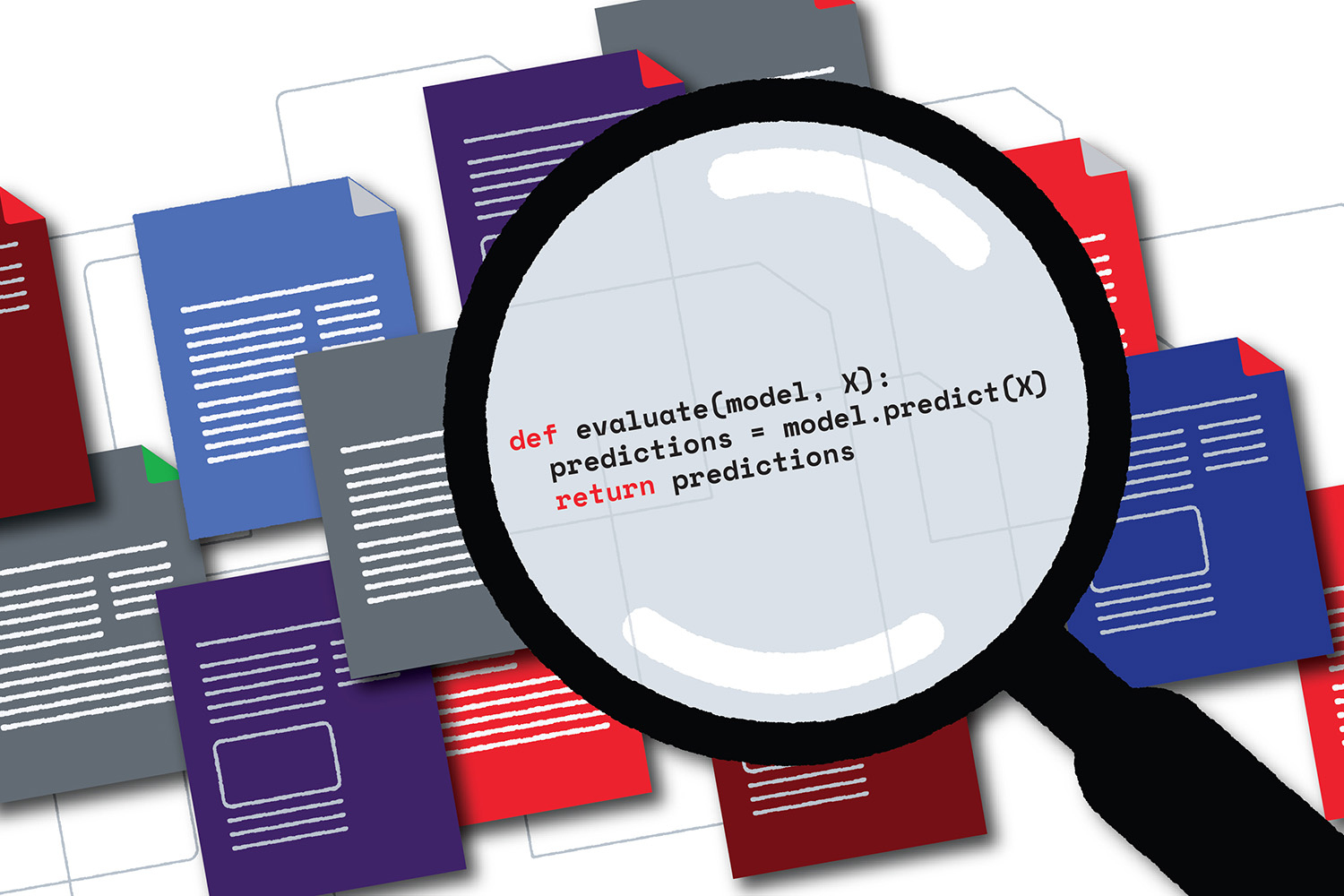
Loading the full article…
This text was published by MIT News on AI and written by Bwiza Gihana Deborah | Institute for Medical Engineering and Science. It is reproduced here with attribution so you can read it in full; the rights remain with the publisher. Read it at the source ↗
The headline, key points and digest above were generated by Digest AI's editorial model from the linked sources. Automated summaries can contain errors: the sources are the record. Spotted a mistake? Tell us. Published by Martin K., who runs Digest AI and handles corrections.
More in Research
All →- Google DeepMind cuts quantum circuit costs with Gemini 4 agents · 1 src
- Hi-TPH dataset improves T cell receptor binding predictions · 1 src
- OpenAI releases 'yardstick for intelligence': Let's pause here · 1 src
- Hugging Face outlines steps for building and maintaining agentic evaluations · 1 src
- Apple launches 200,000-person study on health AI trust with OpenEvidence · 1 src
Comments
via GitHub Discussions