Noctua says its NF-A4x10 5V PWM fan cools CAIM1 anti-AI 4K camera
Noctua announced its NF‑A4x10 5V PWM fan is being used in the CAIM1 camera, a niche 4K device built to prove that captured media have not been altered or generated by AI. The camera runs high‑bitrate imaging and cryptographic calculations simultaneously, so active cooling is required to avoid throttling.
Key points
- Noctua’s NF-A4x10 5V PWM fan is used to cool the CAIM1 camera’s sensor and cryptographic processor.
- The CAIM1 camera records unaltered 4K media and generates edge cryptographic proofs stored on immutable decentralized storage.
- Commercial production of CAIM1 is planned for Q1 2027 after prototype trade‑show demos in Japan.
According to Noctua, the fan’s quiet, compact design and strong airflow made it suitable for the camera’s tight shell, where it sits behind the image sensor and pushes air across an alloy heatsink backplate before exiting the chassis. The camera’s “onboard hardware attestation with edge cryptographic proof generation” stores proof on immutable, decentralized storage, allowing independent verification of media origin.
Prototypes have been printed with Prusament PETG in Noctua Beige and Noctua Brown, and the devices will be shown at several trade shows in Japan later this month. Commercial batches are targeted for Q1 2027 availability.
Noctua fans prevent the CAIM1 ‘Anti-AI’ 4K camera from throttling — unusual camera’s processor gets toasty as it records while performing cryptographic calculations
Tom's Hardware · 20 September 2026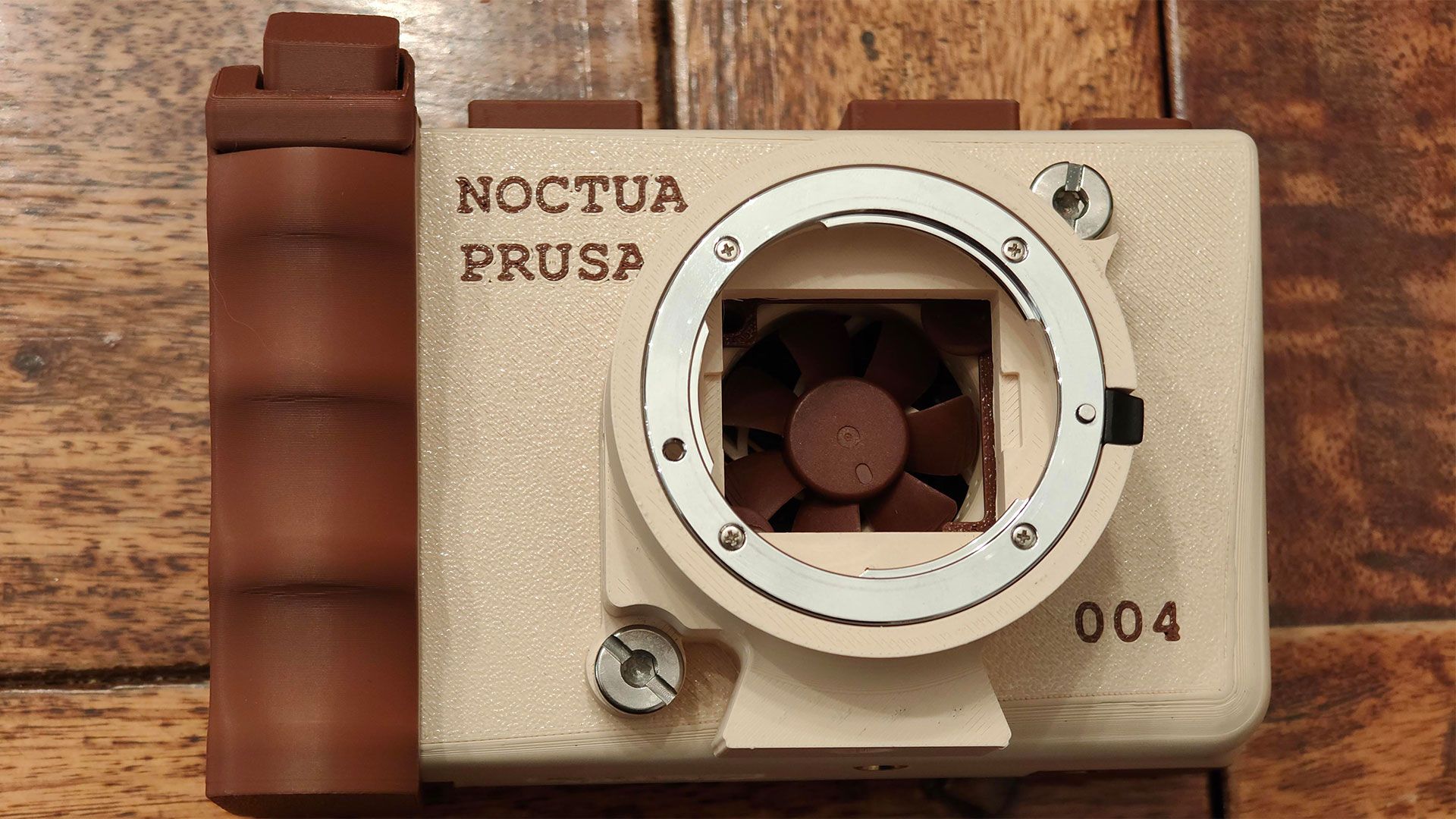
A premium PC DIY fan brand has announced that one of its prized spinners is being used in a 4K camera. Noctua says that its NF-A4x10 5V PWM was used by the CAIM1 camera designers due to its quiet, compact nature and strong airflow and pressure performance. This camera runs two intensive processing tasks simultaneously within a compact shell, high-bitrate imaging and cryptography, hence the need for active cooling to prevent throttling.
The CAIM1 is something of a niche product. It has been designed to create photo and video captures that one can say with certainty haven’t been altered or generated using AI. Noctua says it is “cooling a camera built to prove reality.” CAIM1 is short for Counter Artificial Intelligence Machine 1.
From the brief description provided by the source, this anti-AI functionality seems to work by piping the imagery directly from the lens/sensor through an “onboard hardware attestation with edge cryptographic proof generation” process. This is stored on the camera’s “immutable, decentralized storage, enabling the origin of the media to be verified independently,” says the Austrian air-cooling specialist.
Of course Noctua’s involvement was beneficial to the camera makers for its high-quality precision fans. The CAIM1 generates heat through its high-bitrate 4K imaging activity, its cryptographic processing, all within the confines of a compact handling-friendly shell. Other key considerations of the designers were precise PWM fan control, and finding a fan with minimal noise (as the camera records audio) and minimal microvibrations.
Noctua says its NF-A4x10 5V, with its PWM’s SSO2 bearing system and smooth motor drive fitted the bill. This tiny fan was leveraged in a unified single-airstream cooling design with custom anti-vibration mounts, situated right behind the image sensor. This directs air across the sensor’s alloy heatsink backplate, and which gets exhausted though the camera chassis left side.
Our nozzle-headed readers will also be pondering over the Prusa branding on the camera body. The simple answer is that the CAIM1 is still at the prototyping stage and these models have been prepared using 3D printers and Prusament PETG Noctua Beige and Noctua Brown for the outer shell and fan mount. CAIM1 devices will be showcased at a handful of trade shows in Japan later this month. However, commercial batches are targeting Q1 2027 availability.
Mark Tyson is a news editor at Tom's Hardware. He enjoys covering the full breadth of PC tech; from business and semiconductor design to products approaching the edge of reason.
This text was published by Tom's Hardware and written by Mark Tyson. It is reproduced here with attribution so you can read it in full; the rights remain with the publisher. Read it at the source ↗
The headline, key points and digest above were generated by Digest AI's editorial model from the linked sources. Automated summaries can contain errors: the sources are the record. Spotted a mistake? Tell us.
More in Hardware & Compute
All →- AMD Radeon RX 10800 XT could outperform RTX 5090, insider leaks suggest · 1 src
- Petlibro launches Granary 2 AI feeder series for multi‑cat homes · 1 src
- Valve releases Steam Frame VR headset that works as standalone and PC device · 1 src
- Meta develops camera-free 'Luna' smart glasses to address privacy concerns · 4 src
- Apple launches iPhone 18 Pro and Pro Max worldwide as CEO John Ternus greets fans · 2 src
Comments
via GitHub Discussions