OpenAI acquires Glass Imaging for $300 million to boost AI camera tools
OpenAI announced the purchase of Glass Imaging, a venture‑backed photo‑processing startup, for US$300 million. Glass Imaging offers a neural ISP called “Glass AI” that claims to turn phone‑camera shots from small sensors into images resembling those from full‑frame DSLRs, and it can even alter a subject’s pose in the final picture. The company’s website showcases examples taken on iPhone 15 and…
Key points
- OpenAI bought Glass Imaging for US$300 million.
- Glass AI neural ISP can enhance phone photos and modify subject pose.
- OpenAI spent $6.5 billion on Io Products and may delay IPO until 2027.
OpenAI has not detailed how it will integrate the technology, but analysts note the move aligns with the lab’s long‑standing ambition to launch an AI‑driven hardware device. The acquisition is modest compared with the $6.5 billion OpenAI spent on Io Products, the design firm founded by former Apple chief designer Jony Ive. OpenAI is also thought to be preparing a stock offering, likely delayed until 2027 because of ongoing AI‑safety concerns.
The story so far
2 episodes →- OpenAI acquires Glass Imaging for $300 million to boost AI camera toolsthis story
ChatGPT plans to replace your phone's camera app with AI-simulated DSLR-quality following this US$300 million acquisition – will it make a camera, too?
digitalcameraworld.com · 19 September 2026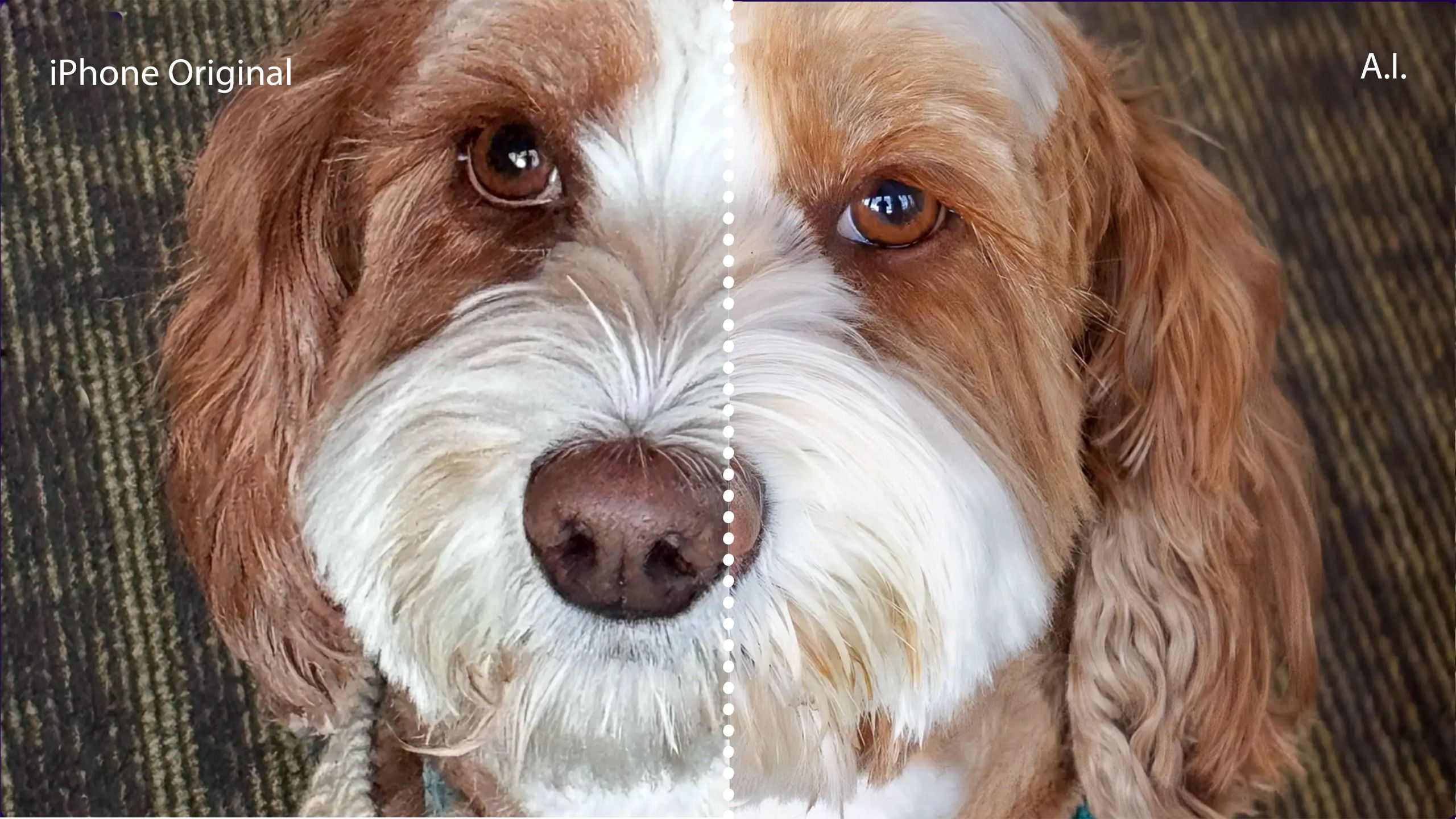
OpenAI, the company behind ChatGPT, might have picked up most attention this week with a former employee's vague warnings about the chances of AI wiping out humanity.
However, despite the calls to slow down development, it hasn't halted work on its camera tools, acquiring a photo-processing company that might even go toward the company's long-anticipated AI gadget.
Glass Imaging is an AI tool that helps improve the quality of images taken with the small image sensors and lenses on camera phones, and create results more like those on devices with full-frame sensors, like DSLRs or mirrorless cameras.
There is an extensive gallery of examples on the company site, largely shot on the iPhone 15 and iPhone 16 cameras in imperfect light. I was especially interested to see that the AI wasn't above altering the pose of the subject; look at the boy in the example, whose head has turned to face the camera.
Glass A.I. processing sample
An original image shot on an iPhone and the result of Glass A.I. processing
Glass Imaging was a venture-backed company that claimed it could "Unlock the full potential of imaging systems," and the technology used is called 'Glass AI'. It claims to be a "neural ISP" – which presumably means image signal processing.
Image signal processing is the next step on a digital camera's circuits after capturing the light with the sensor. The signal, perhaps from a CMOS sensor, passes via analog-to-digital conversion to an a ISP chip (or a combined system-on-a-chip).
This is where the color science and processing takes place that results in an image file that can be handed off to the storage (such as a memory card).
The best camera deals, reviews, product advice, and unmissable photography news, direct to your inbox!
I understand that adding better technology (under the umbrella of AI) to the ISP can result in theoretically better images than otherwise expected from the same chip.
Essentially, this is what Apple calls "computational photography" – and all camera companies, to a greater or lesser extent, attempt already. Indeed the Honor 600 phone has already incorporated this very tech. Glass Imaging is just openly promising to use the latest thing in tech – AI – and suggesting it'll do it better.
Where that looks a bit strange is in the examples that change the pose rather than just the texture and quality of the image. Now that is the kind of thing that might result from generative AI, but (at least to my way of thinking) isn't really just improving the lens and sensor to their theoretical maximum!
Eliminating grain and making it look like you used 'better glass'? That's great. But changing the pose? That is a different matter.
Not that OpenAI has specified its plans for the software, but the company has been investing a great deal in bringing its own AI-driven device to market – and many are suggesting there is a connection.
This spend is pocket change compared to the $6.5 billion (around £4.9 billion / AU$9.1 billion) OpenAI spent on Io Products, the company Jony Ive founded. Ive is formerly Apple's chief designer, with the iPhone in his list of credits, and has already been connected to smart devices with cameras.
OpenAI is also still thought to be preparing a stock offering, though that is likely to wait until 2027 because of the AI safety fears (or, more precisely, the fear that the IPO won't work as well as hoped in the present climate).
If you can't wait, why not just check out the best iPhone for photography?
With over 20 years of expertise as a tech journalist, Adam brings a wealth of knowledge across a vast number of product categories, including timelapse cameras, home security cameras, NVR cameras, photography books, webcams, 3D printers and 3D scanners, borescopes, radar detectors… and, above all, drones.
Adam is our resident expert on all aspects of camera drones and drone photography, from buying guides on the best choices for aerial photographers of all ability levels to the latest rules and regulations on piloting drones.
He is the author of a number of books, including The Complete Guide to Drones, The Smart Smart Home Handbook, 101 Tips for DSLR Video and The Drone Pilot's Handbook.
x: @AdamJuniper | Instagram: @juniperific
You must confirm your public display name before commenting
Please logout and then login again, you will then be prompted to enter your display name.
This text was published by digitalcameraworld.com and written by https://www.digitalcameraworld.com/author/adam-juniper. It is reproduced here with attribution so you can read it in full; the rights remain with the publisher. Read it at the source ↗
The headline, key points and digest above were generated by Digest AI's editorial model from the linked sources. Automated summaries can contain errors: the sources are the record. Spotted a mistake? Tell us.
More in Business & Funding
All →- Higher rates and AI safety concerns drive mixed Wall Street performance · 1 src
- Opinion: investors should heed SpaceX's $1 trillion wipeout before backing Anthropic IPO · 1 src
- Vals raises $40 million series a to expand AI benchmarking · 1 src
- Google, Cloudflare, Microsoft test AI content payment models, report says · 3 src
- Meta acquires Stilla.ai, could turn Business Agent into new revenue source · 1 src
Comments
via GitHub Discussions