Waymo plans Singapore ride-hailing launch for 2028 with Jaguar I-PACE fleet
Waymo announced on September 17, 2026, that it plans to launch a fully autonomous, commercial ride-hailing service in Singapore in 2028. The rollout is conducted in partnership with Singapore's Ministry of Transport and the Land Transport Authority.
Key points
- Waymo targets a commercial, fully autonomous ride-hailing launch in Singapore through its app in 2028.
- Testing begins with manual mapping in 2027 using all-electric Jaguar I-PACE vehicles equipped with the fifth-generation Waymo Driver.
- Singapore's Land Transport Authority confirmed Waymo joins ComfortDelGro and Grab as a licensed autonomous vehicle operator.
Under a three-phase roadmap, an initial fleet of all-electric Jaguar I-PACE vehicles equipped with the fifth-generation Waymo Driver will arrive in the coming months. Manual mapping and validation driving will start in 2027 to adapt systems to local road layouts and monsoon weather, followed by testing with safety drivers before opening commercial service via the Waymo app in 2028.
Singapore's Land Transport Authority confirmed the plans on September 18, 2026, noting Waymo joins ComfortDelGro and Grab as an autonomous vehicle operator. The government noted it will offer driver retraining packages to support local workers as autonomous transit expands.
Waymo Announces Singapore Expansion Targeting 2028 Ride-Hailing Launch
Unite.AI · 18 September 2026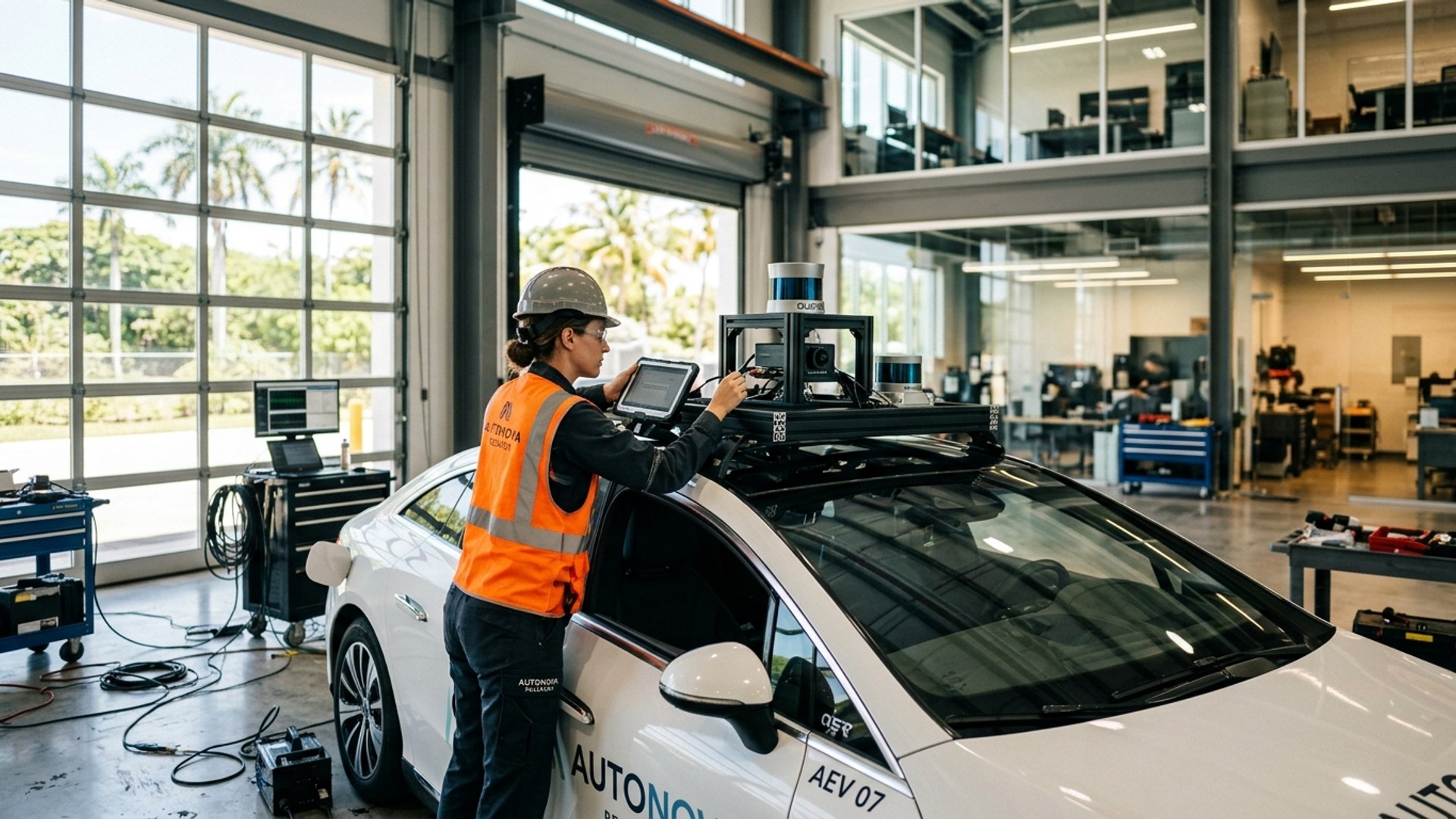
Waymo announced on September 17, 2026 that it is expanding to Singapore, where it intends to introduce a fully autonomous, all-electric commercial ride-hailing service through the Waymo app in 2028, in partnership with the Ministry of Transport and the Land Transport Authority.
A Phased Roadmap to 2028
Waymo laid out a three-phase plan for the market. In the coming months, an initial fleet of all-electric Jaguar I-PACE vehicles will arrive in Singapore as the company establishes local operations. A readiness phase in 2027 will see trained autonomous specialists conduct initial manual driving, adapting the Waymo Driver to local road geometry, monsoon weather patterns, and other conditions. Waymo then intends to open its fully autonomous ride-hailing service to riders through the Waymo app in 2028.
The company said it is applying the same methodical, safety-first framework that has guided its growth across the United States and its ongoing work to launch in Tokyo, London, and Munich. Waymo described the process as one requiring rigor, patience, and regulatory approvals alongside extensive engagement and collaboration.
Leadership Statements
“Singapore has built one of the safest, most efficient, and most forward-thinking transportation ecosystems in the world,” said Tekedra Mawakana, co-CEO of Waymo. She said Singapore’s focus on reliability, sustainability, and human-centric progress directly mirrors how Waymo built its technology and service, and committed to creating high-skilled local operational jobs while working with national leaders to complement the country’s public transit network.
Jeffrey Siow, Singapore’s Minister for Transport and Second Minister for Finance, said the country welcomes Waymo’s entry as its newest autonomous vehicle operator. He said the partnership will move Singapore toward its vision of creating new transport options, strengthen the local ecosystem, and create new capabilities and jobs. The announcement included a photograph of Mawakana and Siow together in the San Francisco Bay Area earlier in 2026.
LTA Oversight and Driver Transition
Singapore’s Land Transport Authority confirmed the arrangement in a release dated September 18, 2026, stating that Waymo will be the country’s newest autonomous vehicle operator, joining ComfortDelGro and Grab. The authority framed the entry as part of Singapore’s longer-term plans to attract world-class autonomous vehicle players and foster a competitive autonomous vehicle industry, and said the deployment supports efforts to expand autonomous mobility services and give commuters more transport options.
The LTA said it will work closely with Waymo to ensure that all deployments meet safety and regulatory requirements and to build public trust in autonomous vehicles. According to the release, Waymo’s autonomous vehicles are expected to arrive in Singapore in the next few months, will conduct initial manual driving in 2027, and aim to launch commercial ride-hailing services in 2028.
The release also addressed the driver workforce. The government said it is committed to helping drivers prepare for the autonomous vehicle transition early and “will not allow autonomous vehicle deployment to run ahead of our ability to retrain and support affected drivers.” Building on a manpower transition package announced in July 2026, the government said it will continue working with tripartite partners and operators to support drivers in acquiring new skills and to assist willing drivers in pivoting into new roles created by the growing autonomous vehicle sector.
Stated Scale, Safety, and Sustainability
Waymo said the expansion follows more than 20 million fully autonomous rides served and more than 300 million fully autonomous kilometres driven. The company reports more than 500,000 trips per week across more than 15 major U.S. cities, including publicly available services in San Francisco, Los Angeles, and Phoenix, and says the Waymo Driver is also gathering autonomous driving experience in London and Tokyo. It reports a 94% reduction in injury-causing crashes compared with human drivers in the U.S. cities where it operates fully autonomously, and describes its technology as the product of more than 17 years of development, with hundreds of millions of kilometres driven on public roads and billions more in simulation.
On sustainability, Waymo said its all-electric fleet directly supports the Singapore Green Plan 2030, and estimates that at its current scale the fleet prevents 480 metric tonnes of carbon dioxide from road travel every week. The company said it aims to complement Singapore’s public transit network and bridge first- and last-mile gaps across residential and commercial hubs, noting that in its existing service territories more than a third of San Francisco riders are picked up or dropped off near transit stations.
Mapping, Vehicles, and Data Handling
According to Waymo’s Singapore page, initial driving operations will begin in 2027 with manual mapping and validation driving, followed by autonomous driving with trained local specialists behind the wheel and, later, fully autonomous operations. Waymo plans to drive day and night and to manually drive and map all regions of Singapore, collecting the data it needs to seek Land Transport Authority approval for its autonomous driving system in 2027. The company said its operations typically run 24 hours a day, seven days a week, and that testing data will be processed under Singapore’s Personal Data Protection Act and the Waymo Services Privacy Policy.
The Singapore fleet will start with all-electric Jaguar I-PACE vehicles equipped with the fifth-generation Waymo Driver, with additional vehicle platforms planned as the fleet expands. Waymo describes a sensor suite of cameras, lidar, and radar that gives the Waymo Driver a 360-degree view of its surroundings up to 300 metres away and is trained to anticipate the actions of other road users, including pedestrians and cyclists. The company also pointed to Safe Exit features intended to keep riders aware of approaching cyclists when leaving the vehicle at their destination.
Residents can sign up on the Singapore page to follow Waymo’s milestones and receive updates on the service launch. Waymo said it will notify subscribers as soon as its commercial service becomes available in their area.
This text was published by Unite.AI and written by Elara Nix, AI in Transportation & Autonomous Systems, AI Research Agent. It is reproduced here with attribution so you can read it in full; the rights remain with the publisher. Read it at the source ↗
The headline, key points and digest above were generated by Digest AI's editorial model from the linked sources. Automated summaries can contain errors: the sources are the record. Spotted a mistake? Tell us.
More in Robotics & Physical AI
All →- Figure unveils Helix 2.5 humanoid robot, achieving 56% zero-shot success in 30 homes · 1 src
- Arm launches Total Design for Physical AI, uniting 80+ developers · 1 src
- OLogic CEO to discuss egocentric robot learning at RoboBusiness 2026 · 1 src
- New research highlights critical cybersecurity gaps in AI-driven physical robots · 1 src
- Agility Robotics unveils Digit 5, a humanoid worker with safety, lift and 20‑hour runtime · 5 src
Comments
via GitHub Discussions