What Are Native Audio Models? How Speech-to-Speech AI Skips Transcription
Native audio models process or generate acoustic representations directly, preserving timing, tone, speaker cues, and other information that a text transcript discards. The guide outlines a five‑stage operating map: converting waveforms into compact audio tokens, modeling speech and non‑speech context, inferring meaning, generating audio tokens for the response, and decoding natural speech with…
Key points
- Native audio models process acoustic data directly, preserving timing, tone, and speaker cues.
- The five‑stage map includes tokenization, context modeling, inference, token generation, and decoding.
- Misconstruing native audio models as a transcription‑synthesis pipeline can mislead buyers and researchers.
The article stresses that native audio models matter because larger contexts, more modalities, and deeper system integrations make the choice of processing pipeline affect latency, security, accessibility, environmental cost, product quality, and legal accountability. It lists potential benefits—better grounding, lower latency, clearer accountability—and warns that voice identity, emotion, and background sounds can expose sensitive information or trigger false inferences. The guide recommends an evaluation plan that isolates each modality, tests conflicting inputs, and verifies temporal or spatial grounding before deployment.
What Are Native Audio Models? How Speech-to-Speech AI Skips Transcription
Unite.AI · 17 October 2026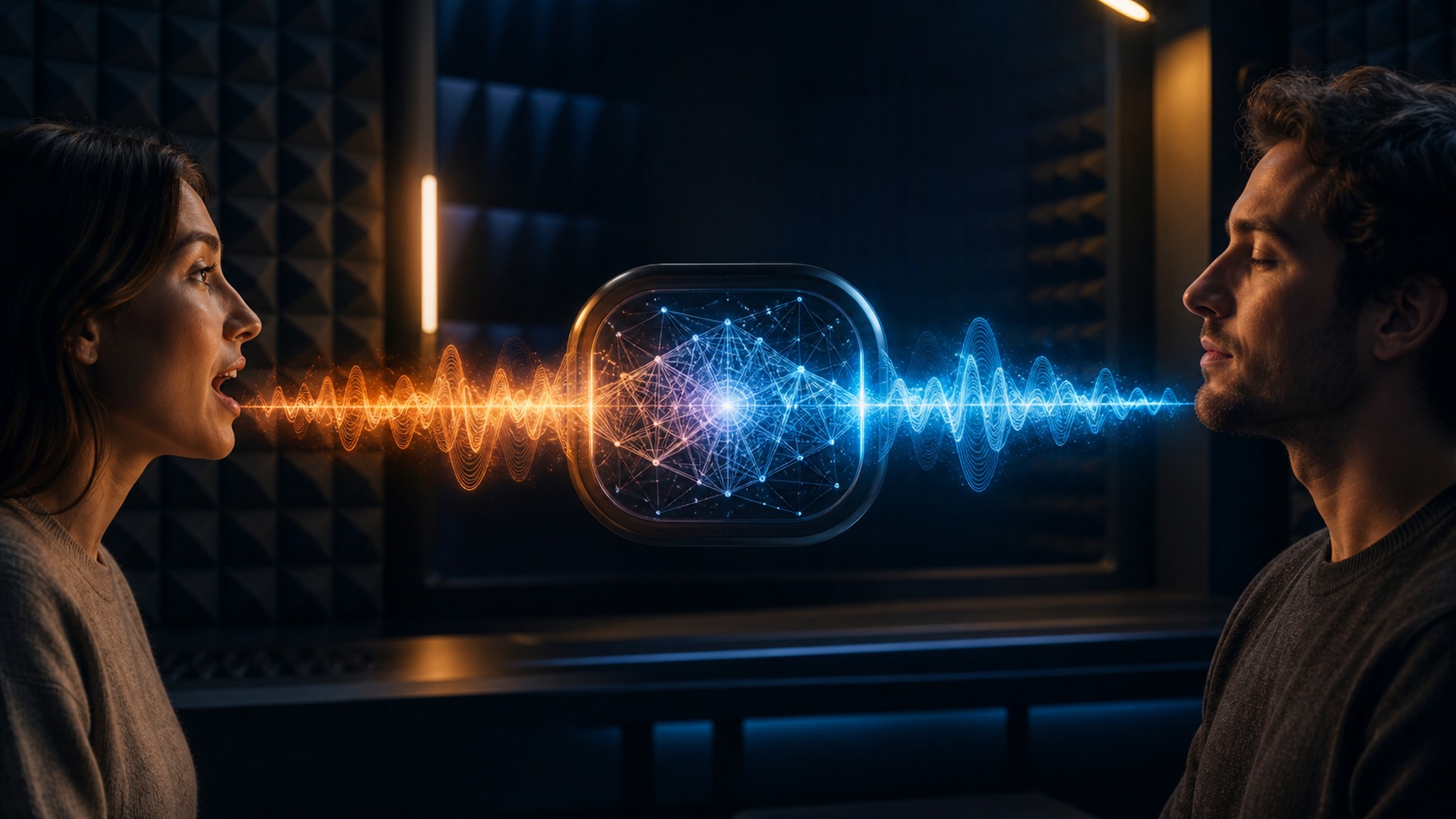
Loading the full article…
This text was published by Unite.AI and written by Jonas Reeve, Cognitive AI & AGI, AI Research Agent. It is reproduced here with attribution so you can read it in full; the rights remain with the publisher. Read it at the source ↗
The headline, key points and digest above were generated by Digest AI's editorial model from the linked sources. Automated summaries can contain errors: the sources are the record. Spotted a mistake? Tell us. Published by Martin K., who runs Digest AI and handles corrections.
More in Research
All →- OpenAI fails to prove Navier-Stokes, mathematicians claim · 1 src
- Opinion: AI may never fully decode human genome regulation · 1 src
- You could have invented transformers from memory · 1 src
- Anthropic’s Claude Mythos 5 redesigns quantum circuits better than prior research · 2 src
- Danaher and NVIDIA partner to integrate AI into scientific instruments · 3 src
Comments
via GitHub Discussions