Zapata and UMD launch ForShor for verified AI-assisted quantum research
Zapata Quantum and the University of Maryland (UMD) introduced ForShor.ai, an open challenge for AI-assisted quantum research. The project focuses on optimizing circuit designs for Shor’s algorithm, requiring AI-proposed solutions to pass formal Lean 4 proofs before earning leaderboard credit.
Key points
- ForShor.ai requires AI-proposed quantum circuit designs to pass Lean 4 formal proofs for leaderboard credit
- Targeted at optimizing Shor’s algorithm circuits, not cryptographic factorization, with O(n²⁺ᵉ) gate-cost scaling
- Zapata and UMD aim to test verification methods for their Quantum Pilot platform, with community co-authorship possible
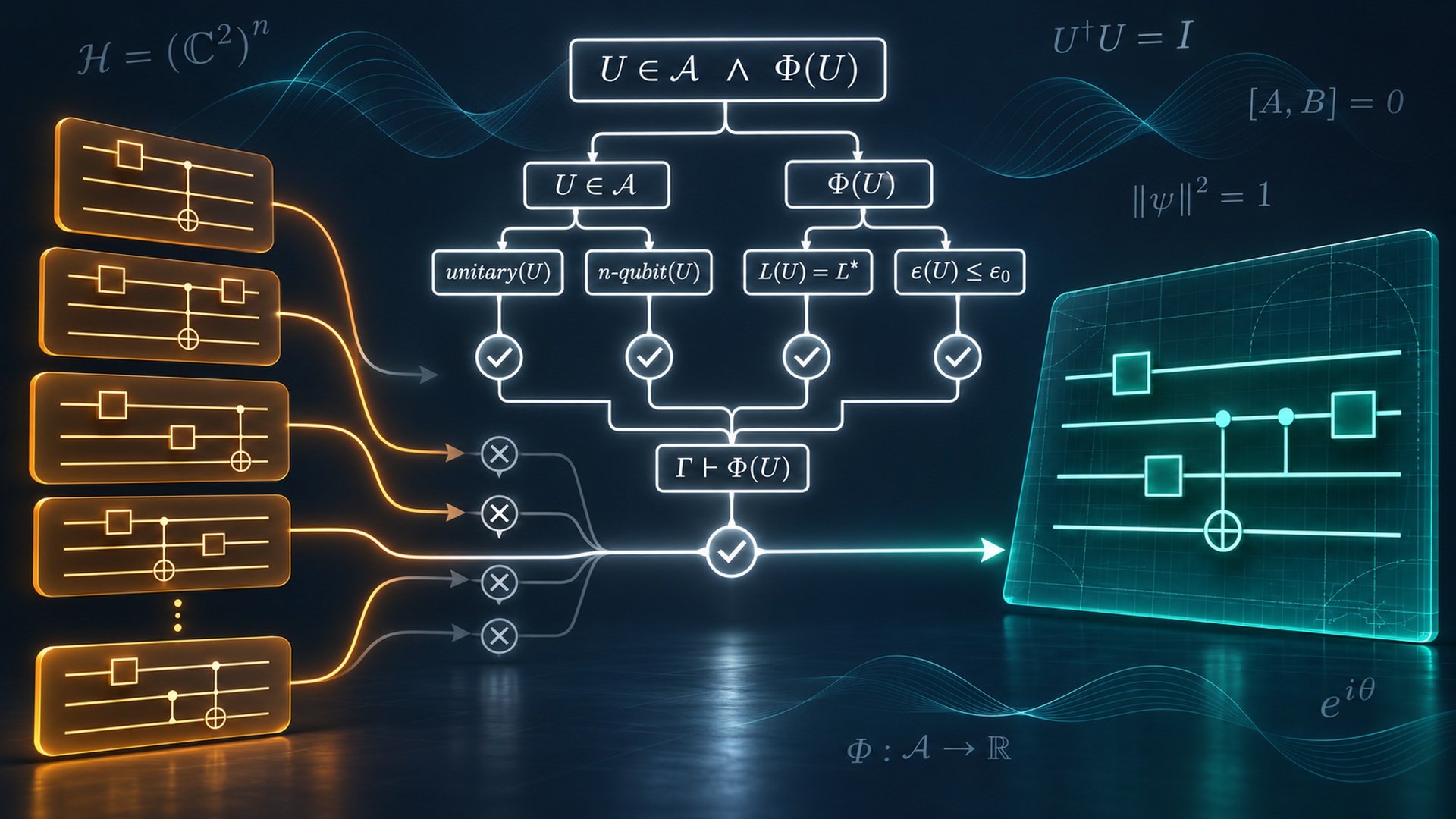
Unlike cryptographic proofs, ForShor targets circuit optimization—not hardware factorization—using a framework that checks mathematical correctness, gate-cost scaling, and translation to detailed circuits. The challenge, announced November 18, aims to test verification methods for Zapata’s Quantum Pilot platform, which combines knowledge layers, computational tools, and formal verification workflows.
ForShor’s preprint, submitted November 16 by researchers including Anirudh Suresh and Yudong Cao, highlights how AI can propose designs while formal methods validate them. The project emphasizes human-in-the-loop review, with contributors potentially becoming co-authors of future research. Peter Shor, the algorithm’s creator and a member of Zapata’s Scientific Advisory Board, described it as a ‘white-box learning environment.’ The initiative does not address physical quantum hardware but provides a software framework for inspectable, reproducible quantum research.
The headline, key points and digest above were generated by Digest AI's editorial model from the linked sources. Automated summaries can contain errors: the sources are the record. Spotted a mistake? Tell us. Published by Martin K., who runs Digest AI and handles corrections.
More in Research
All →- OpenAI publishes a preprint that claims to prove that the matrix multiplication exponent (ω) is exactly 9/4, addressing a major open problem in mathematics · 2 src
- Study of 58 Anthropic customers finds 80% of AI-built apps automate manual tasks · 2 src
- Anthropic researcher proves Riemann Hypothesis with Claude, verified by Lean community · 17 src
- Google DeepMind proves Signal encryption code with AlphaProof Code · 1 src
- OpenAI reports GPT-6 designs proteins with reasoning, lab tests show binding · 4 src
Comments
via GitHub Discussions