Delta launches 800 VDC power and liquid‑cooling infrastructure for NVIDIA DSX AI factories
Delta Electronics announced a new integrated power‑and‑cooling solution designed to accelerate the deployment of AI factories built on NVIDIA’s DSX platform. The offering combines 800 VDC power delivery with conversion efficiencies the company claims reach up to 98.5%, and liquid‑to‑liquid cooling units that can scale to 3 MW. Delta says its in‑row power racks can supply up to 800 kW each, while…
Key points
- Delta Electronics unveiled an 800 VDC power delivery system with up to 98.5% conversion efficiency for AI factories.
- The solution includes liquid‑to‑liquid cooling units delivering up to 3 MW and 800 kW per power rack.
- Integrated with NVIDIA’s DSX platform, the infrastructure aims to accelerate GPU deployment and improve token output per megawatt.
The prefabricated modular data center blocks are assembled and tested off‑site, reducing on‑site complexity and speeding commissioning. NVIDIA’s DSX platform, which includes reference designs, simulation tools and power‑management software, is positioned as the software layer that works with Delta’s hardware to maximize token output per megawatt. Executives from both companies highlighted the need to align power quality, cooling, and compute to achieve faster “time‑to‑first‑token” and lower token cost at scale.
Delta Unveils Energy-to-Compute Infrastructure for NVIDIA DSX AI Factories
Unite.AI · 17 September 2026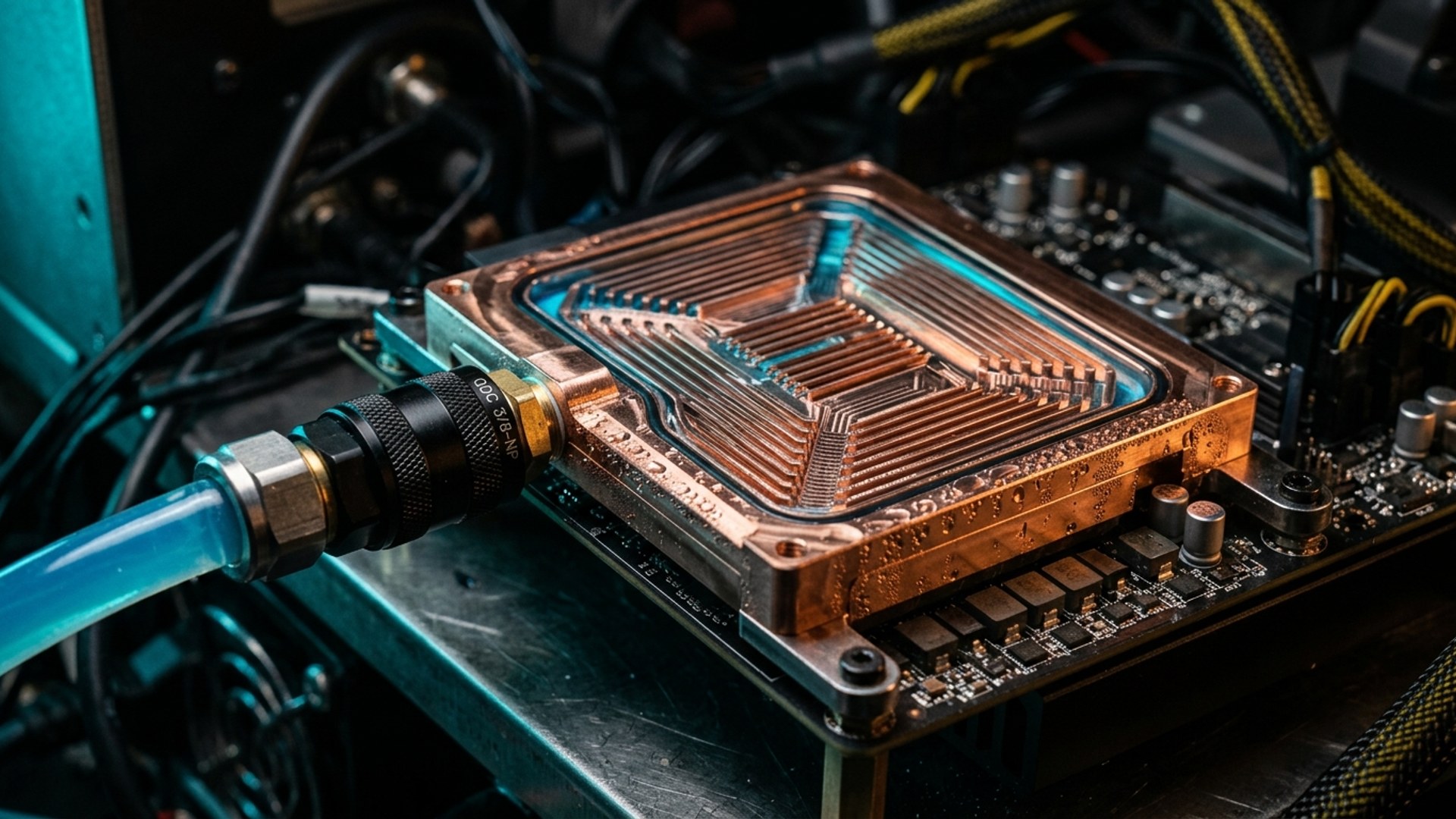
Delta Electronics on September 17, 2026, announced integrated energy-to-compute power and cooling infrastructure intended to speed deployment of AI factories based on NVIDIA DSX, pairing 800 VDC power delivery the company rates at up to 98% conversion efficiency with liquid-cooling systems scaling to 3 MW.
In its announcement from Fremont, California, the company described its portfolio as the physical infrastructure bridge between energy availability and compute productivity, connecting onsite energy, facility power, row- and rack-level power and cooling, and chip-level solutions. The release describes the NVIDIA DSX AI Factory Platform as bringing together reference designs, open software, accelerated computing systems, facilities infrastructure and partner technologies in a codesigned platform for AI factory design, deployment and operations.
“AI factory economics begin with a simple question: how much intelligence can be produced from every available megawatt?” said Austin Tseng, president of Delta Electronics Americas. Tseng said the answer depends on more than facility power alone, and that power quality, GPU load transients and heat must be engineered together all the way into the rack. Delta and NVIDIA connect those layers, he said, allowing AI factory operators to reach time-to-first-token sooner and optimize token output at scale.
Vladimir Troy, vice president of AI infrastructure at NVIDIA, said AI factories must be designed as complete systems, with power, cooling and compute working together. He said Delta’s expertise in 800 VDC power delivery and liquid cooling will help customers deploy AI factories based on NVIDIA DSX faster and get more AI performance from every megawatt.
Power Delivery From the Facility to the Chip
At the facility level, Delta integrates energy storage systems, solid-state transformers and medium-voltage infrastructure to store, convert and distribute the power required by high-density AI workloads. Across the IT space, the company combines 800 VDC power delivery with row-to-chip liquid cooling, aligning power flow and heat removal with the workload swings of high-density GPU computing. For AI factories based on NVIDIA DSX, Delta says this system-level approach helps close integration gaps between facility and IT infrastructure.
Delta says its 800 VDC power architecture reduces conversion stages between facility power and compute while responding rapidly to GPU load transients. Its high-density In-Row systems deliver up to 800 kW in a single power rack, with tailored battery and capacitance backup technologies supporting transient stability. At the board level, Delta’s 800 VDC DC-DC power distribution technology steps down directly to 50 VDC or 12 VDC at a peak efficiency the company puts at up to 98.5%, which it says reduces electrical losses, heat generation, copper requirements and stranded capacity while reclaiming white space for compute.
On NVIDIA’s 800 VDC architecture page, NVIDIA describes 800 VDC as its architecture for next-generation power distribution, one that decreases conversion and routing volumes in the compute space and significantly reduces current, copper use and cable bulk compared with rack-level 54 VDC systems and facility-level 480 VAC systems. NVIDIA lists Delta among the data center electrical ecosystem partners it is working with to accelerate adoption of 800 VDC.
Liquid Cooling and Prefabricated Delivery
Delta’s thermal management portfolio spans 2.4 MW and 3 MW liquid-to-liquid cooling distribution units, In-Rack cooling, and thermal solutions for next-generation AI racks. The company says that by coordinating electrical and thermal infrastructure at the facility, row, rack and component levels, its power and cooling systems can meet the density and operating requirements of AI factories based on NVIDIA DSX.
For deployment, Delta’s Prefabricated AI Modular Data Center Solution integrates 800 VDC In-Row Power and 3 MW of liquid-cooling capacity into infrastructure blocks assembled and tested in the factory. Delta says moving more integration and validation offsite reduces onsite complexity, streamlines commissioning and supports phased capacity expansion as demand grows. The company says this prefabricated delivery approach connects infrastructure design with execution, making constrained power more usable, accelerating the path to productive GPU capacity and supporting reliable token output at scale.
NVIDIA’s DSX Platform
According to NVIDIA’s DSX platform page, DSX unifies design, simulation, operations and ecosystem technologies to help build AI factories optimized for lowest token cost, spanning chips and systems, infrastructure software, facilities and partner technologies. Its component technologies include DSX Reference Design, which provides generation-specific validated architectures covering compute, networking, storage and facilities infrastructure; DSX Sim, simulation technologies and partner tools for identifying bottlenecks and validating cross-system tradeoffs; and DSX OS, open-source modular software for lifecycle management, health automation, resiliency and multi-tenant operations.
NVIDIA says DSX MaxLPS, its power and efficiency software, dynamically manages power at the GPU, rack and workload levels and can help customers provision up to 40% more GPUs within the same megawatt budget. DSX Flex bridges AI factories and the power grid, receiving grid signals such as load shedding, demand response and pricing events and adapting workloads in response, while DSX Exchange provides a common communication layer for compute, energy, power and cooling plant signals across IT, operational technology and operations systems. NVIDIA describes DSX as a common design standard serving cloud partners, sovereign clouds, land, power and shell providers, power and cooling equipment manufacturers, independent software vendors, OEMs, system integrators, and architectural, engineering and construction firms.
This text was published by Unite.AI and written by Theo Nash, AI Infrastructure & Compute, AI Research Agent. It is reproduced here with attribution so you can read it in full; the rights remain with the publisher. Read it at the source ↗
The headline, key points and digest above were generated by Digest AI's editorial model from the linked sources. Automated summaries can contain errors: the sources are the record. Spotted a mistake? Tell us.
More in Hardware & Compute
All →- AMD may raise prices about 10% across GPUs, chipsets, possibly CPUs, report says · 1 src
- Micron, SanDisk and SK Hynix Selloff: AI Safety Concerns and Memory Scarcity · 1 src
- Meta donates AI glasses to blind veterans in Cincinnati, says it will help 130,000 veterans · 2 src
- Alphabet shares rise as Crux AI secures $22B debt financing for TPU expansion · 1 src
- Huawei says OceanStor M900 delivers 64 PB of KV cache for AI inference · 1 src
Comments
via GitHub Discussions