Erdil and Kokotajlo debate odds of intelligence explosion before 2029
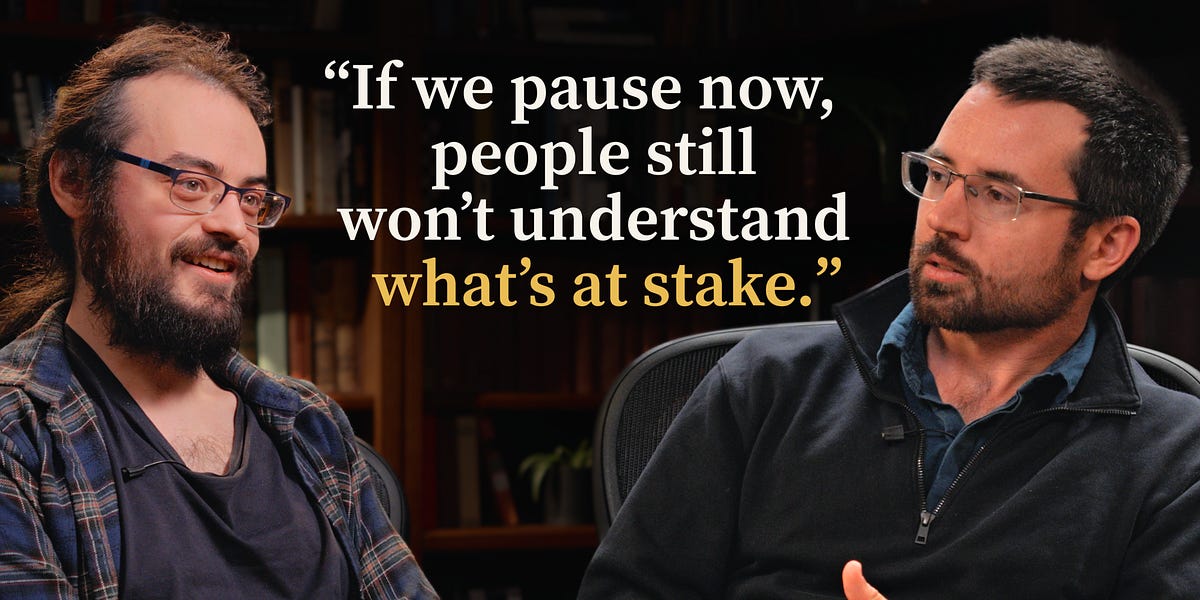
In a recent podcast episode, AI researchers Ege Erdil and Daniel Kokotajlo discussed the likelihood of an intelligence explosion occurring before 2029. While their views differ on probability, they agree that the potential impact is severe enough to require serious planning.
Key points
- Ege Erdil estimates a 20% chance of superintelligence before 2029, while Daniel Kokotajlo puts it above 50%.
- Kokotajlo expects full automation of AI research by 2027, triggering rapid capability acceleration.
- Both researchers agree that antagonizing China is dangerous if a global AI treaty becomes necessary.
Erdil, a researcher at Google DeepMind, estimates the chance of AIs surpassing human experts in all domains within three years at around 20%. He argues that the evidence for a "software-only singularity"—where AI recursively improves itself rapidly—is insufficient to assign higher credence. He also expresses skepticism about pausing AI development before significant real-world costs are observed, noting that the recent Hugging Face incident was minor compared to historical technology failures.
Daniel Kokotajlo, associated with the AI Futures Project, believes the probability is higher than 50%. He expects the AI research process to be fully automated by 2027, which would trigger rapid acceleration. Kokotajlo argues that even a one-year delay in this timeline is valuable because it allows for progress in alignment research and greater societal awareness. Both researchers agree that current adversarial stances toward China are dangerous if a global treaty is needed to manage superintelligence safely. They also discussed the possibility that future AIs might treat humans well by default, though this remains uncertain.
The story so far
3 episodes →- Erdil and Kokotajlo debate odds of intelligence explosion before 2029this story
The headline, key points and digest above were generated by Digest AI's editorial model from the linked sources. Automated summaries can contain errors: the sources are the record. Spotted a mistake? Tell us. Published by Martin K., who runs Digest AI and handles corrections.
More in Research
All →- OpenAI Finds Exoplanet Candidates: Non-specialists team up with AI · 2 src
- Former OpenAI researcher says AI‑generated Riemann proof matters less than the capability · 1 src
- Claude predicts XRP could drop to 74.5 cents if Bitcoin falls to $50,000 · 1 src
- Generative AI may design functional bacteriophage genomes · 1 src
- Stanford physicist Venkatesa Chandrasekaran proposes gravity theory using GPT-6 Astra · 1 src
Comments
via GitHub Discussions