MIT researchers use IRIS model to decode cell signaling pathways
MIT researchers have developed a machine learning model called IRIS that identifies unique gene activity patterns, or "fingerprints," left by specific signaling pathways in cells. Led by assistant professor Pulin Li and graduate student Nicholas Hutchins, the team discovered that these fingerprints remain consistent across different cell types. This finding allows scientists to reconstruct the…
Key points
- IRIS is a machine learning model that detects consistent signaling pathway fingerprints across different cell types.
- The model was trained on human embryonic stem cell data and tested on mouse embryos during gastrulation.
- IRIS correctly predicted signaling pathways for lung development, a result confirmed by experimental validation.
The model, published in Nature Methods on Sept. 8, uses transfer learning to recognize signaling patterns in cell types it has not previously encountered. Trained on data from human embryonic stem cells, IRIS successfully predicted signaling events in mouse embryos during gastrulation. The system accurately identified when pathways activated in cells destined to become heart, gut, muscle, and spinal cord tissue.
In one test, IRIS predicted a specific signaling pathway required for lung development, a prediction confirmed by experiments in mouse embryos. This capability could accelerate the creation of organoids and improve stem cell engineering for regenerative medicine. By understanding the precise signals that drive cell fate, researchers may better study diseases like asthma and lung cancer and design therapies to repair damaged tissue.
AI model decodes the language cells use to communicate
MIT News on AI · 15 October 2026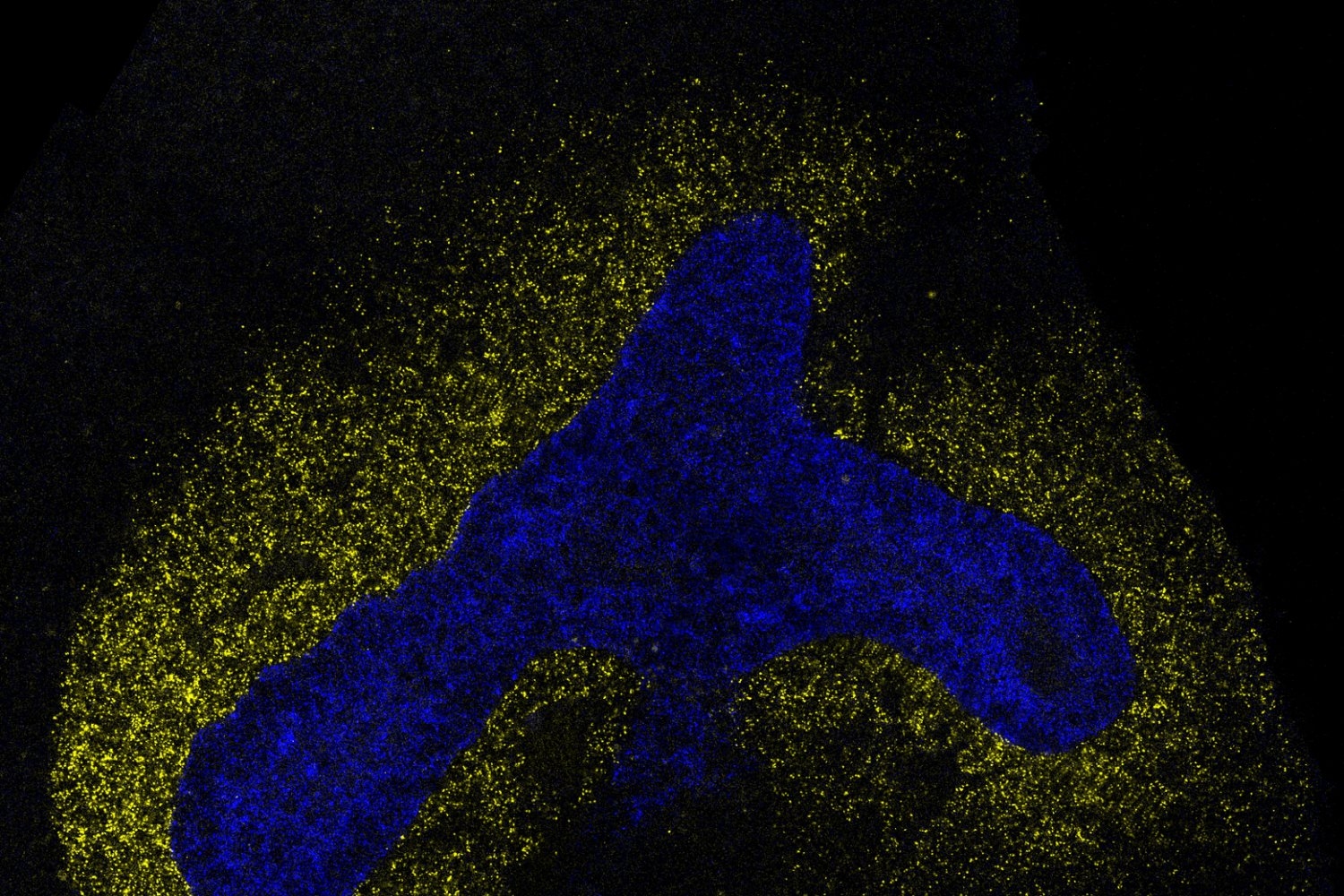
Loading the full article…
This text was published by MIT News on AI and written by Shafaq Zia | Whitehead Institute. It is reproduced here with attribution so you can read it in full; the rights remain with the publisher. Read it at the source ↗
The headline, key points and digest above were generated by Digest AI's editorial model from the linked sources. Automated summaries can contain errors: the sources are the record. Spotted a mistake? Tell us. Published by Martin K., who runs Digest AI and handles corrections.
More in Research
All →- OpenAI offers U.S. university labs free ChatGPT Business seats with Rosalind access · 1 src
- Author accuses Anthropic of intentionally copying Mononoke’s data model for Scion · 2 src
- Simons Foundation, Anthropic, OpenAI commit $15M for math AI · 2 src
- Google DeepMind’s Antigravity finds novel antimicrobial peptide candidate · 1 src
- Anthropic reports small AI models may self-replicate on IoT devices within months · 28 src
Comments
via GitHub Discussions