MIT researchers show neural networks can build own learning rules
Scientists at MIT’s McGovern Institute and K. Lisa Yang Integrative Computational Neuroscience Center published a paper in PNAS on Oct. 9, arguing that artificial neural networks should be judged by their ability to self-organize rather than by performance alone. The team, led by researcher Liao and including Liu Ziyin and Yulu Gan, developed a computational network that starts with randomly…
Key points
- MIT researchers published a paper in PNAS on Oct. 9 about self-organizing neural networks.
- The network uses simple rules to reshape connections, mimicking biological learning processes.
- The self-organizing model performs similarly to networks using standard back-propagation algorithms.
The researchers demonstrated that this self-organizing network can learn to recognize patterns and classify images, achieving performance levels similar to networks trained using standard back-propagation. However, the team notes that back-propagation is unlikely to be how the brain actually learns. By focusing on self-organization, the model offers a more biologically plausible framework for understanding how biological brains organize themselves without an external architect.
Liao and colleagues suggest that understanding these self-organizing rules could aid in developing brain-computer interfaces and neuroprosthetics, which require knowledge of neuron-neuron interactions. While the primary goal is neuroscience, the team believes these insights could eventually lead to machine learning systems that perform better or in more human-like ways.
How artificial neural networks build their own learning machinery
MIT News on AI · 13 October 2026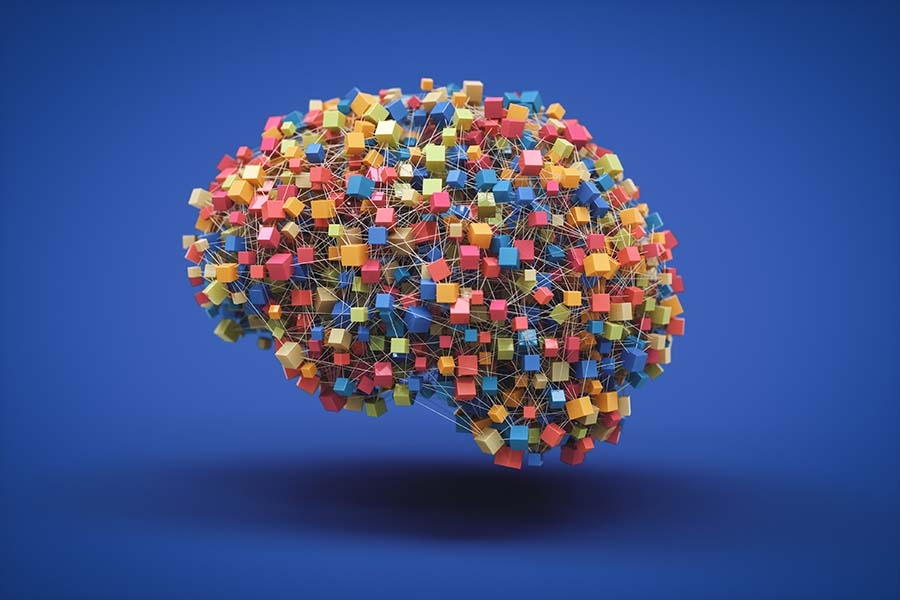
Loading the full article…
This text was published by MIT News on AI and written by Jennifer Michalowski | McGovern Institute for Brain Research. It is reproduced here with attribution so you can read it in full; the rights remain with the publisher. Read it at the source ↗
The headline, key points and digest above were generated by Digest AI's editorial model from the linked sources. Automated summaries can contain errors: the sources are the record. Spotted a mistake? Tell us. Published by Martin K., who runs Digest AI and handles corrections.
More in Research
All →- DeepMind and Biohub debate AlphaFold’s limits in protein folding · 1 src
- Periodic Labs introduces synthesis superintelligence for materials discovery · 1 src
- OpenAI publishes 722 math papers solving 90 of top 500 problems · 1 src
- Anthropic research suggests small AI models may self-replicate on IoT devices · 7 src
- Researcher predicts AI engineering acceleration but not superintelligence · 1 src
Comments
via GitHub Discussions