University of Alabama model predicts violence risk from video, audio and motion
Researchers at the University of Alabama trained an AI model to detect pre-violent behavior using video, audio, and motion data. The model analyzed 443 four-second clips from the XD-Violence dataset, combining facial appearance, audio, and pose-estimated motion. The best configuration—using DeiT-Tiny with all three modalities—achieved 91.21% accuracy, 88.96% balanced accuracy, 93.65% F1-score,…
Key points
- Model combines facial appearance, audio, and motion data for pre-violence prediction, achieving 96.38% ROC-AUC
- Trained on 443 four-second clips from the XD-Violence dataset, with clips labeled as No Risk, Low Risk, Medium Risk, or High Risk
- Researchers warn dataset size limits conclusions; model must be tested on larger, more diverse data before deployment
The study highlights potential for AI to shift from detecting violence in real-time to predicting it beforehand. However, the authors caution that the dataset is small (443 clips), and further validation on larger, diverse datasets is needed to confirm robustness. Critics may raise ethical concerns about predictive policing, given past fears of AI-driven surveillance systems like those in Minority Report or Person of Interest. The research was published on October 1, 2026.
Predicting Violence in Advance With AI
Unite.AI · 1 October 2026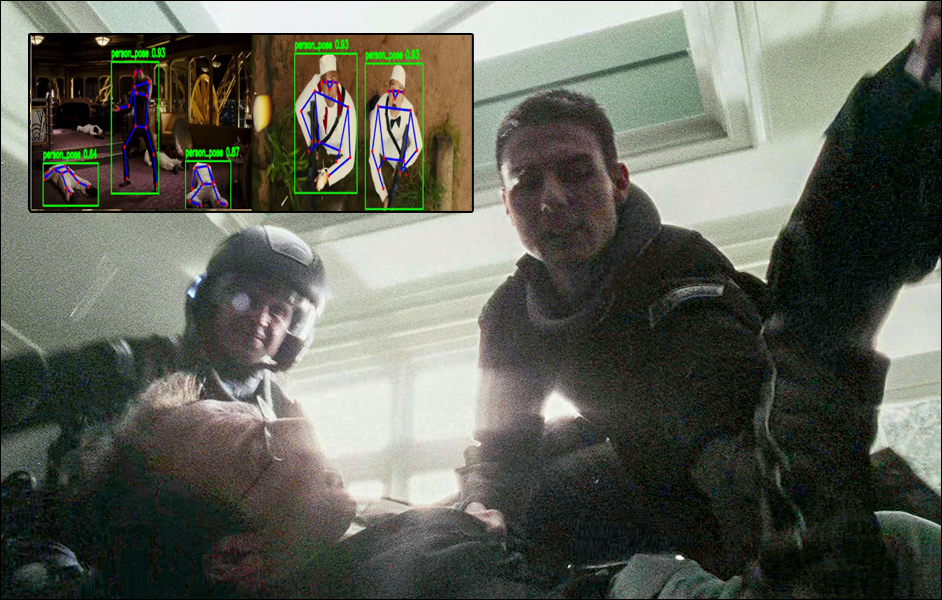
Loading the full article…
This text was published by Unite.AI and written by Martin Anderson. It is reproduced here with attribution so you can read it in full; the rights remain with the publisher. Read it at the source ↗
The headline, key points and digest above were generated by Digest AI's editorial model from the linked sources. Automated summaries can contain errors: the sources are the record. Spotted a mistake? Tell us. Published by Martin K., who runs Digest AI and handles corrections.
More in Research
All →- Schwartz releases BootLoops 1.0, an open-source LLM harness for science · 1 src
- Qwen4Exp adds MTP support in llama.cpp pull request · 1 src
- Unite.AI outlines stages of AI hallucination and its risks · 1 src
- Deep learning perturbation models outperform baselines under calibrated metrics, study finds · 1 src
- DeepEvidence agent explores biomedical evidence beyond retrieval · 1 src
Comments
via GitHub Discussions