Agility Robotics unveils Digit 5, a safer humanoid that crouches when humans approach
Agility Robotics introduced Digit 5, a 5‑foot‑11‑inch, 284‑lb humanoid designed for warehouse work without safety cages. The robot can lift 50 lb, reach shelves up to 7.2 ft high, and runs for about 90 minutes after a 9‑minute charge, which the company says supports more than 20 hours of work per day. When a person comes too close, multiple sensors and onboard AI cause Digit 5 to steer away,…
Key points
- Digit 5 can lift 50 lb, reach 7.2‑ft shelves and runs 90 min after a 9‑min charge.
- When a person gets too close, the robot crouches, stops, or cuts motor power to ensure safety.
- Agility claims over $300 M in multi‑year Digit 5 orders and aims to produce 10 K units annually.
Digit 4, the predecessor, has logged over 65,000 hours at sites such as GXO, Schaeffler, Amazon and Toyota, but Digit 5 is not yet deployed; early access is planned for the first half of 2027. Agility reports more than $300 million in multi‑year orders for Digit 5 and says its Oregon RoboFab facility could eventually produce 10,000 units a year. The company’s filings show $1.78 million in net sales for 2025 against a $140.2 million operating loss ahead of a $2.5 billion SPAC merger.
The story so far
2 episodes →- Agility Robotics unveils Digit 5, a safer humanoid that crouches when humans approachthis story
Agility's new 'safer' humanoid
The Rundown AI · 17 September 2026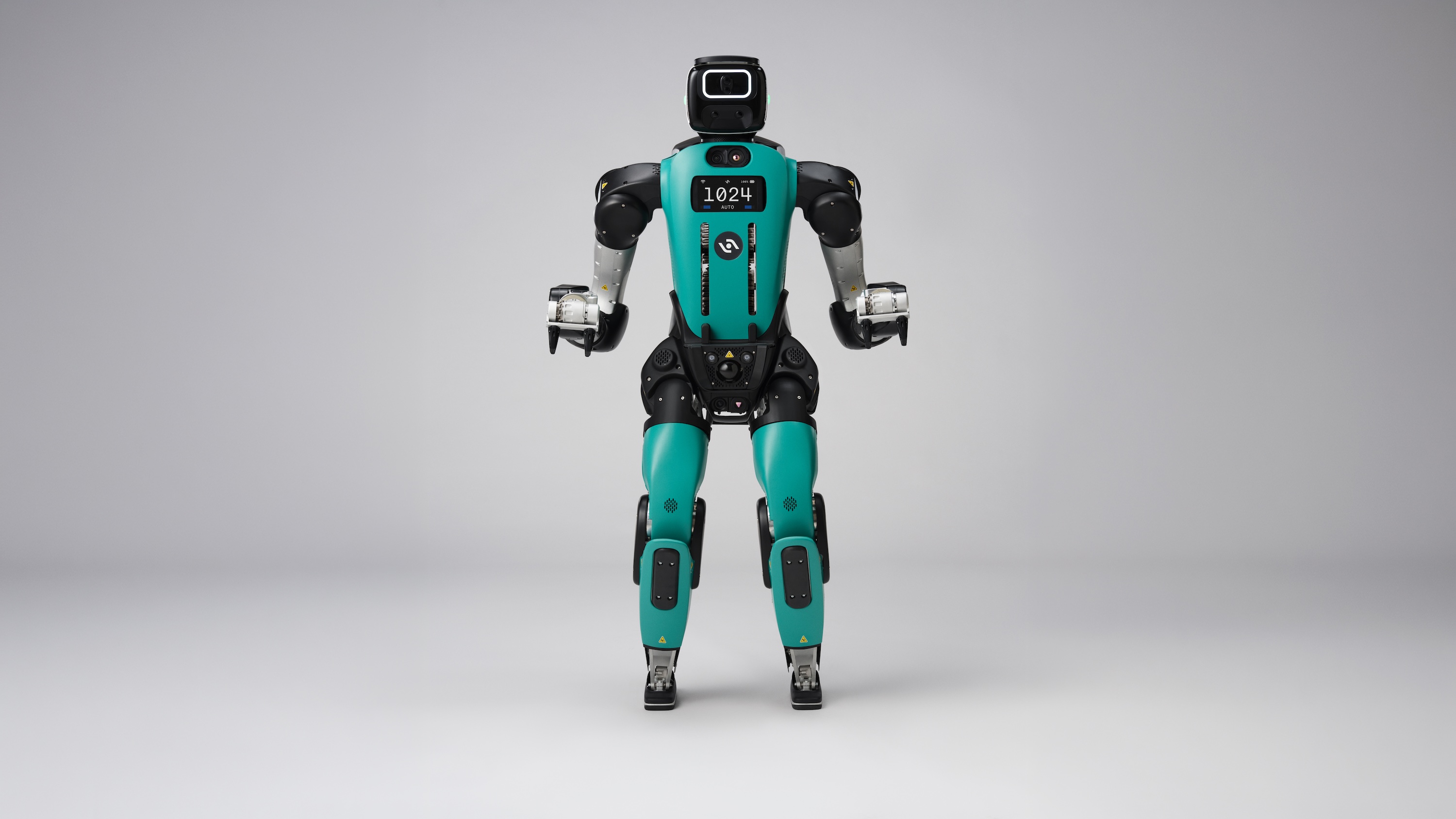
Good morning, robotics enthusiasts. Agility Robotics wants its new humanoid out of the safety cage and onto the warehouse floor, working alongside people.
Digit 5 is bigger, stronger, and faster to recharge than Digit 4 — but the more interesting upgrade is what it does when a human gets too close.
In today’s robotics rundown:
- Agility’s Digit literally crouches to keep humans safe
- Waymo to launch robotaxis in Tokyo
- How Unitree drove humanoid prices so low
- UBTECH’s factory can build 10K humanoids a year
AGILITY
Image source: Agility Robotics
The Rundown: Agility Robotics just unveiled Digit 5, a 5'11", 284 lb. humanoid built to work next to people without safety barriers — and when someone gets too close, it stops, sits down, and cuts motor power.
- Multiple sensors and onboard AI track nearby people, and Digit 5 steers around them, stops, or drops into a seated position.
- It can lift 50 lb. and reach 7.2-ft. shelves, with its battery giving 90 min runtime on just 9 min of charge — fast enough, Agility says, for 20+ hours of work per day.
- Digit 4 has logged 65K+ hours at sites including GXO, Schaeffler, Amazon, and Toyota, but Digit 5 isn’t deployed yet: early access starts in H1 2027.
- The company says it already has more than $300M in multi-year Digit 5 orders, while its Oregon RoboFab could eventually produce 10K robots a year.
Why it matters: Fencing off each humanoid makes large fleets impractical — Agility’s chief business officer told Bloomberg a warehouse can't wall in 150 robots individually. Agility still has to prove Digit 5 works at scale, with filings showing $1.78M in 2025 net sales against a $140.2M operating loss ahead of its $2.5B SPAC merger.
WAYMO
The Rundown: Waymo plans to launch fully driverless taxis in Tokyo in 2027, teaming with Japan’s biggest taxi players for its first commercial robotaxi service in Asia, with no safety driver behind the wheel.
- Waymo is partnering with taxi-app giant GO and nearly century-old operator Nihon Kotsu, starting with a small fleet before scaling to ~100 vehicles.
- While Waymo’s current Tokyo testing has trained Nihon Kotsu staff in the driver’s seat, the commercial service is intended to be fully unmanned from day one.
- Waymo began driving in Tokyo in 2025 and has spent the past year adapting its system to left-hand traffic, narrow streets, and dense pedestrian traffic.
- Regulatory approval is still pending, while Nissan, Wayve, Uber, and Nuro are all pursuing their own Tokyo robotaxi plans.
Why it matters: Tokyo was Waymo’s first public-road test outside the U.S., and the 2027 rollout would push its international expansion deeper into Asia. Japan’s reported severe driver shortage also gives robotaxis a practical use case, if Waymo can clear regulators and translate its technology to a very different driving environment.
UBTECH
The Rundown: UBTECH is turning the humanoid race into a manufacturing race, opening a new Chinese factory designed to produce more than 10K robots a year — with a 10-minute production cycle — while robots already help keep the line moving.
- The 150,700-sq-ft plant just began production and will primarily build UBTECH’s Walker S and Cruzr series, with multiple models sharing a flexible production line.
- Humanoids handle tasks including depalletizing, palletizing, and material loading, while collaborative robotic arms tighten screws during assembly.
- Siemens software built a 1:1 digital twin of the factory, letting engineers simulate material flows and AGV routes before changing the physical line.
- UBTECH sold 1,079 humanoids in 2025 and 921 in H1 2026, generating $88M in first-half category revenue, but still posted a ~$48M net loss for the period.
Why it matters: UBTECH isn’t alone: Figure has built capacity for up to 12K humanoids a year, while Agility and 1X have facilities designed for ~10K. The industry is installing mass-production infrastructure well ahead of mass adoption, and China is scaling particularly fast, with UBTECH now putting robots to work inside those factories.
MIT researchers built a robotic optics lab that can autonomously assemble, align, run, monitor, and dismantle laser experiments.
Former Waymo CFO Elisa de Martel joined self-driving startup Wayve as CFO, as the $8.5B company prepares to move its tech into commercial robotaxi deployments.
Drone-delivery startup Zipline is reportedly in talks to raise about $1B at a nearly $20B valuation, almost tripling its $7.6B valuation from earlier this year.
NHTSA gave Tesla until Sept. 30 to explain how its Cybercab complies with federal safety standards, adding another regulatory hurdle ahead of a wider rollout.
Autonomous-driving startup May Mobility is going public through a SPAC merger valuing it at $1.4B, in a deal that could raise up to $337M.
Lyft made its first real move into fully driverless robotaxis, adding Waymo vehicles to its Nashville app while handling fleet maintenance and depot operations.
Waymo began opening its driverless robotaxi service in Las Vegas to invited riders, starting with dozens of its new Ojai minivans and plans to expand over time.
Lucid and Bolt announced a plan to deploy 25,000 autonomous vehicles across Europe, using Nvidia’s Hyperion architecture and targeting Level 4 self-driving.
Goldman Sachs sharply raised its humanoid outlook, forecasting the market could reach 6.5M annual shipments and roughly $138B by 2035.
The FCC granted Husqvarna the first exemption from restrictions on foreign-made robotics, allowing its Swedish company’s robot mowers to be sold in the U.S.
Robocurve raised a $10M seed round to build independent, real-world benchmarks for robot AI, testing models on practical tasks rather than relying on polished demos.
Grounded Superintelligence launched an API that turns egocentric video from its lightweight RoboCap wearable into high-precision 3D training data for robots.
This text was published by The Rundown AI and written by Jennifer Mossalgue. It is reproduced here with attribution so you can read it in full; the rights remain with the publisher. Read it at the source ↗
The headline, key points and digest above were generated by Digest AI's editorial model from the linked sources. Automated summaries can contain errors: the sources are the record. Spotted a mistake? Tell us.
More in Robotics & Physical AI
All →- Vsim's fast simulator lets robot Freddo learn tasks in minutes, says founders · 1 src
- Figure unveils Helix 2.5 humanoid robot, achieving 56% zero-shot success in 30 homes · 1 src
- OLogic CEO to discuss egocentric robot learning at RoboBusiness 2026 · 1 src
- New research highlights critical cybersecurity gaps in AI-driven physical robots · 1 src
- Robotics researchers detail strategies to close the embodiment gap for cross-body AI · 1 src
Comments
via GitHub Discussions