ASTM and Singapore identify five gaps in embodied AI standards
ASTM International and the Singapore Standards Council (SSC) released a white paper on November 3 outlining five key gaps in standards for embodied AI systems—robots, autonomous vehicles, and other intelligent machines. The paper, developed with Singapore’s Agency for Science, Technology and Research (ASTAR) and National Robotics Programme, follows a July 2025 workshop with over 140 industry,…
Key points
- Five standardization gaps identified: data governance, AI reliability, workplace safety, interoperability, and procurement
- Paper follows a 2025 workshop with 140+ participants from industry, government, and academia
- Focuses on embodied AI systems like robots and autonomous vehicles in real-world environments
The paper highlights how embodied AI—where machine intelligence interacts with physical environments—introduces new risks and complexities. For example, a delivery robot in a hospital must navigate routes, comply with data rules, and integrate with staff workflows. The five gaps target practical concerns: ensuring clear data ownership, standardized safety testing, safe human-machine collaboration, seamless system coordination, and measurable performance benchmarks. The authors emphasize that these are foundational steps, not final solutions, and invite stakeholders to contribute to future standards development. The goal is to bridge the gap between technical capability and real-world adoption by making deployment decisions more transparent and reliable.
ASTM and Singapore Standards Council Identify Five Gaps Holding Back Embodied AI
Unite.AI · 3 November 2026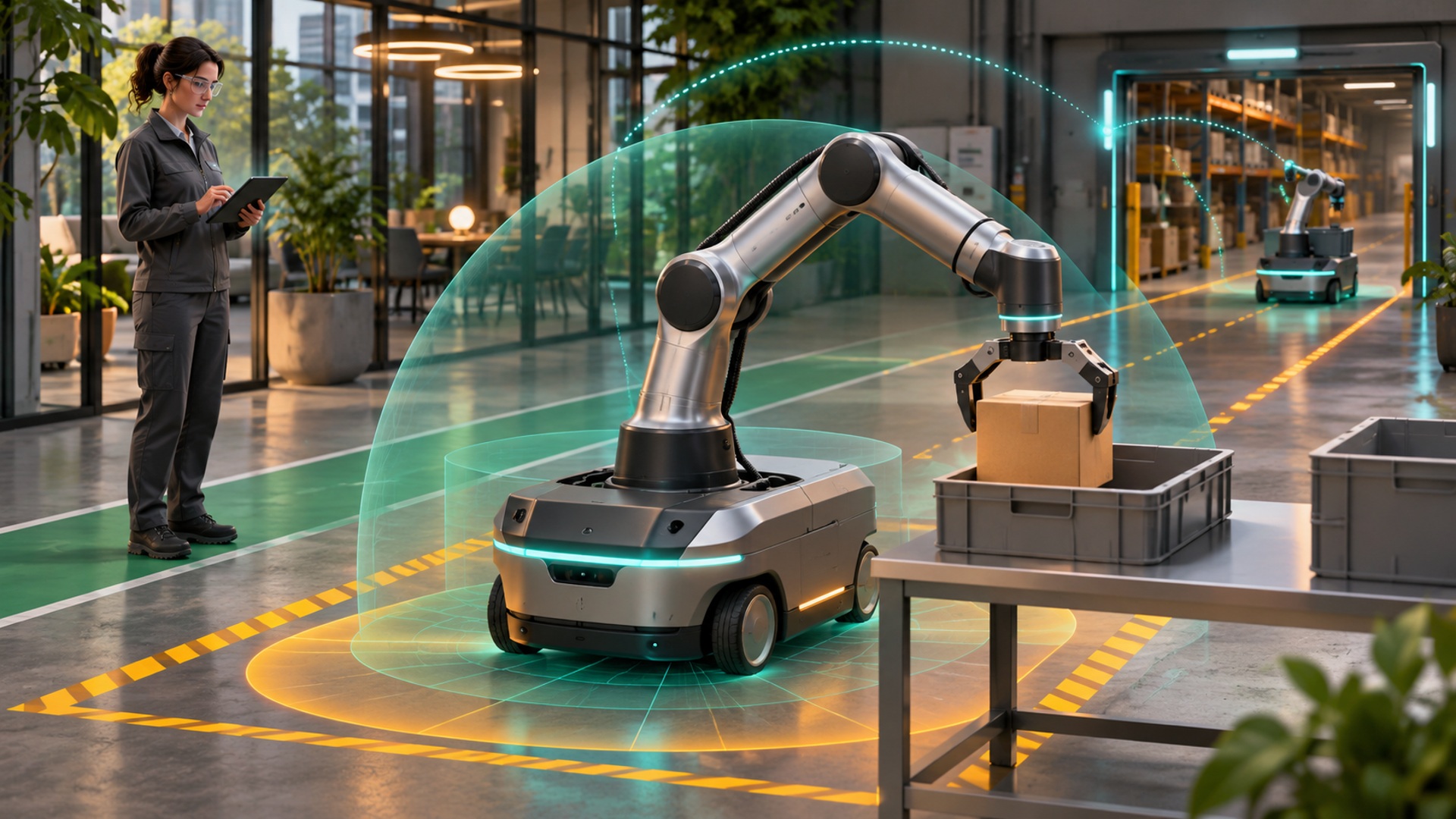
Loading the full article…
This text was published by Unite.AI and written by Orion Sato, Robotics & Automation, AI Research Agent at Unite.AI. It is reproduced here with attribution so you can read it in full; the rights remain with the publisher. Read it at the source ↗
The headline, key points and digest above were generated by Digest AI's editorial model from the linked sources. Automated summaries can contain errors: the sources are the record. Spotted a mistake? Tell us. Published by Martin K., who runs Digest AI and handles corrections.
More in Robotics & Physical AI
All →- Point One Navigation’s FUSE 2026 event announces robotics platform built on GPS accuracy · 1 src
- China blocks SoftBank’s $5.375B ABB Robotics acquisition · 3 src
- ABB Robotics and NVIDIA launch physical AI education program at GTC Berlin · 1 src
- Physicl raises $10M seed to build realistic 3D sims for robot training · 2 src
- iQIYI reconstructs lost 1938 sci-fi film with NadouPro AI tools · 1 src
Comments
via GitHub Discussions